Key takeaways
- For kids who hate losing, start by reducing the emotional load, not by explaining sportsmanship harder.
- Cooperative games let children practice turns, rules, and strategy while everyone wins or loses together.
- Age labels estimate rules complexity; loss tolerance is a separate readiness question.
- A calm end-game script and shorter rounds make recovery easier than a long lecture after tears.
On this page
Quick Answer
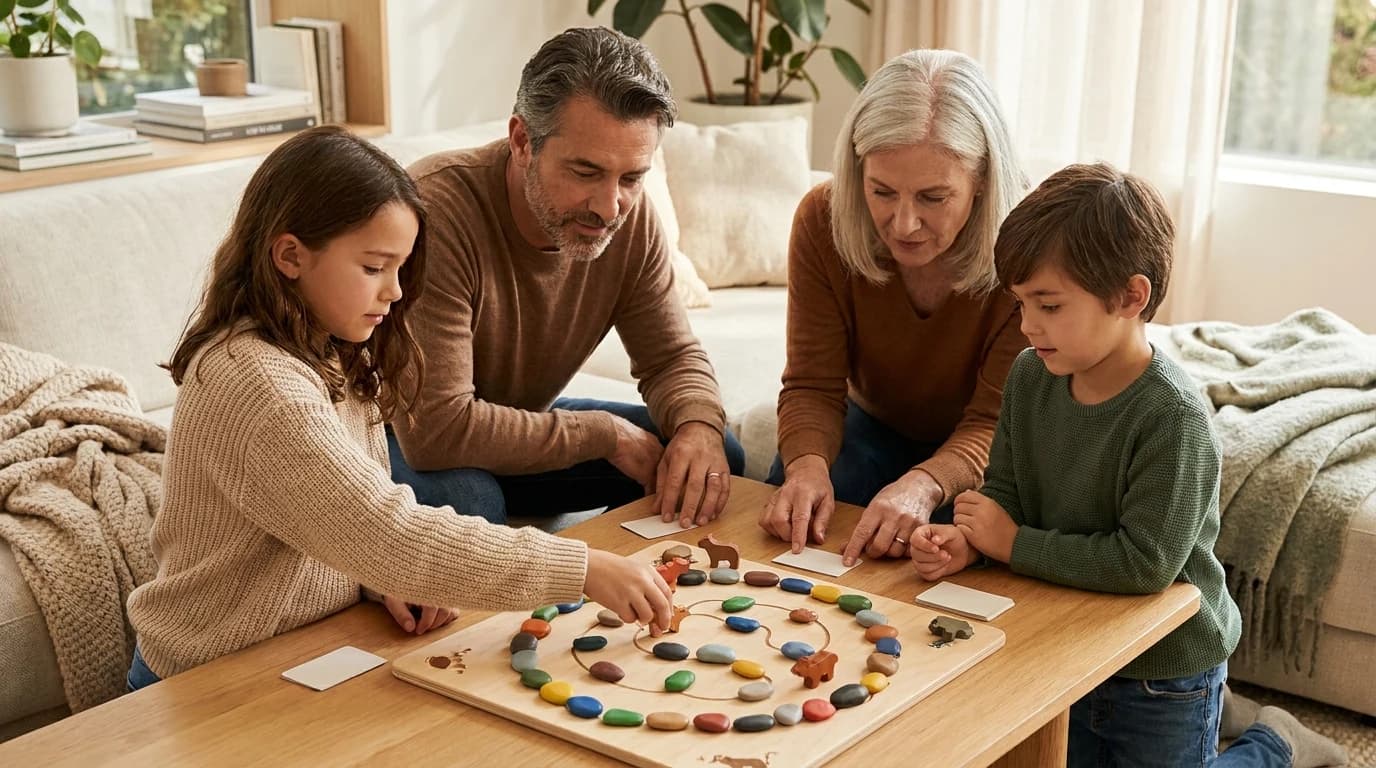
If a child melts down every time a board game has one winner, the answer is not to quit games. It is to lower the emotional load. Start with cooperative games, short team games, or luck-heavy games where the loss does not feel like a personal failure. Cooperativeco-opGame where all players win or lose together against the game's system. Pandemic, Spirit Island, and Gloomhaven are the canonical co-ops. Tends to outperform competitive games for couples and mixed-skill groups. play lets kids practice turns, rules, waiting, and strategy talk while everyone wins or loses together. Then, once the child can recover from a shared loss, add gentle competitive games back in.
The buying mistake: treating "age 5+" on a box as an emotional-readiness promise. It is only a rules estimate.
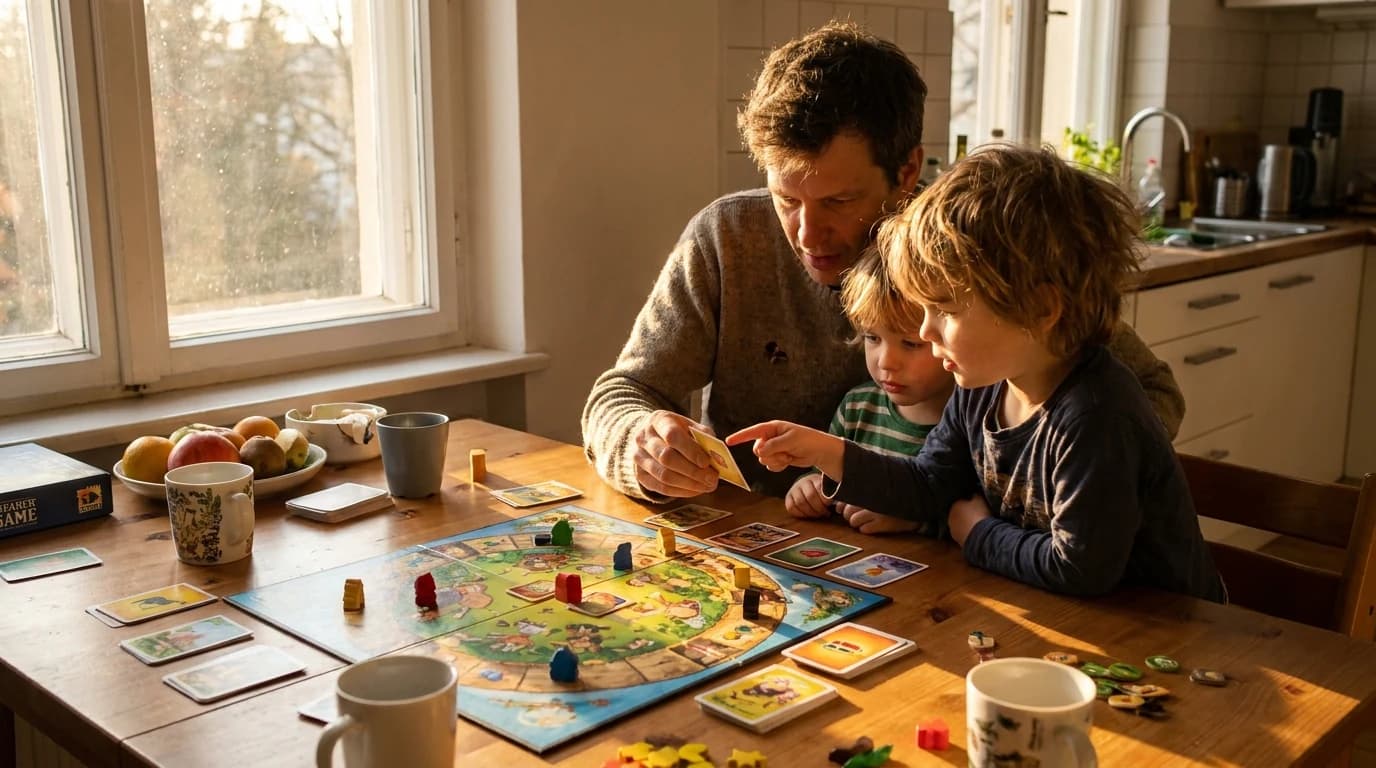
For a kid who hates losing, the better filter is loss tolerance: how singled-out the loser feels, how long the game lasts after the outcome is obvious, and whether adults can model a calm finish.
The loss-tolerance filter
Before you buy another family game, sort the options by what kind of loss they create.
| Game type | Emotional load | Best use |
|---|---|---|
| Cooperative team game | Low | Everyone shares the result; best first move for frequent tears or quitting. |
| Team-vs-team game | Medium-low | A child can lose with a partner instead of standing alone. |
| Luck-heavy race game | Medium | Useful for practicing fairness because no one can claim the winner was simply smarter. |
| Skill-heavy head-to-head game | High | Save for kids who can already say "good game" and reset. |
| Elimination game | Highest | Usually the worst fit; one child is out while everyone else keeps playing. |
This is why CurioRank's cooperative board games category is not just a product genre. It is a behavior-management tool. Co-op games remove the single-loser moment that turns an otherwise good game night into a storm.
Why cooperative games help first
Cooperative games still have stakes. They are not "everyone gets a trophy" games. The board can beat the group. The difference is that the child is not personally defeated by a sibling, parent, or friend.
The research treats board games as a real social setting
That distinction matters. A 2021 study in Scandinavian Journal of Psychology compared cooperative and competitive board-game play with preschoolers. The authors found that cooperative and competitive games produced different behavior patterns, and they treated board games as a real social setting, not just entertainment.
Parenting Science's review of the wider evidence points in the same direction: preschoolers have shown more enjoyment and enthusiasm for cooperative games in head-to-head comparisons, and cooperative versions can create more discussion and reasoning than competitive versions.
A co-op loss gives the child something to do with the feeling
What the child says after a head-to-head loss:
- "I lost."
What the child says after a shared loss:
- "The team got close."
- "We need a better plan."
- "The board won this time."
That leaves room for problem-solving instead of shame.
Match the game to the child, not the box age
Age labels are blunt. A child can be old enough to understand a rule and still not be ready for the social sting of losing. Pathways.org places true cooperative play, playing with others and caring about both the activity and the people involved, at roughly 4 years and up. That does not mean every 4-year-old is ready for a forty-minute game. It means the social foundation is starting to appear.
Use this three-question check instead:
- Can they finish a short turn cycle? If waiting through two other turns is hard, pick a very short game or play as one team.
- Can they tolerate a shared setback? If the group losing is okay but personal losing is explosive, stay cooperative for now.
- Can they repair after disappointment? The goal is not smiling through a loss. It is being able to stop, breathe, and come back later.
If the answer is no, the game is not a moral lesson waiting to happen. It is one developmental band too high. Shelf it for three months and try again.
What to do when the loss happens
The worst moment to teach sportsmanship is the moment a child is already flooded. Plan the ending before the game starts.
- Name the script early. Before the first turn, decide on two closing lines: "Thanks for playing" from the winner and "Good game" from the person who did not win. Keep it short enough to say while upset.
- Model the adult loss out loud. Busy Toddler's losing-at-games guide emphasizes that disappointment is normal, even for adults. Saying "I wanted to win and I feel disappointed, but I can still be happy for you" gives a child language they can borrow.
- Stop before the game turns sour. Positive Parenting Solutions makes a useful point: adults do not finish boring books out of duty, and families do not have to finish a game that has stopped being beneficial. Ending early is not failure if it protects the habit.
- Debrief later, not during tears. After the child is calm, ask one concrete question: "What would make the next game easier to finish?" You are building recovery, not extracting an apology.
A simple upgrade path
Do not jump from a co-op game straight to a winner-takes-all duel. Use a ladder.
- Play fully cooperative. The group wins or loses together.
- Play on teams. A parent can partner with the child and narrate decisions calmly.
- Play luck-first competitive games. Chance makes the outcome easier to accept because no one fully controls it.
- Play short skill games. Keep the rematch available, so one loss is not the whole evening.
- Avoid elimination until later. Waiting after being knocked out is the hardest emotional format.
If you need product-level ideas, start with CurioRank's best cooperative board games and the age-matching guide for how to pick a board game by kids' age. But the title matters less than the format. The right game for a loss-sensitive kid is usually shorter, more cooperative, and less public in how it identifies the loser.
The parent decision rule
The rule worth keeping: if a child quits because losing feels unbearable, buy less competition, not more instruction.
Lectures about being a good sport rarely work when the game structure keeps producing the same emotional injury. Change the structure first. Shared goals, team play, shorter rounds, and predictable end scripts give the child repeated chances to experience disappointment without being alone in it.
That is how games become practice instead of pressure. A kid who can lose with the group today is much closer to losing one-on-one tomorrow.
Your next step
Ready to pick a co-op? These are the ranked picks.
Common questions
Are cooperative games bad for teaching kids how to lose?
Should parents let kids win board games?
What kind of game should come after cooperative games?
What if my child still melts down after a cooperative game?
Research Sources
- Eriksson et al. 2021, Scandinavian Journal of Psychology - The behavioral effects of cooperative and competitive board games in preschoolers
- Parenting Science - Cooperative board games for kids (evidence overview: preschool enjoyment, cooperative reasoning, and developmental fit)
- Busy Toddler - What to Do When Kids Struggle with Losing (normalizing disappointment, modeling loss, end-game scripts)
- Positive Parenting Solutions - To Lose or Not to Lose? Board Game Strategies for Playing with Kids (developmental age, teams, cooperative games, and stopping when a game stops helping)
- Pathways.org - What Are the 6 Stages of Play? (cooperative play at 4+ years and teaching winning and losing)