Key takeaways
- Thick paint, not cheap tools, ruins beginner models. Thin toward the consistency of milk and control how much paint rides on the brush.
- Prime, basecoat, wash, and stop there. A dark wash pools in the recesses and does the shading a beginner cannot yet do by hand.
- Pick one of two paths. Speed or contrast paints for a fast-painted army; classic layer paints if you want to learn the craft.
- Skip the airbrush and the 60-paint set. Six colors, one wash, two brushes, and reps beat any gear purchase.
On this page
Quick answer
You do not need talent, an airbrush, or a $200 paint rack to get your first miniature looking good on the table. You need a primer, a handful of paints, one wash, and a way to keep paint off the deep detail.
Most abandoned first models are not ruined by cheap tools; they are drowned in paint that is too thick. Fix that one thing and the rest is practice.
The one habit that actually fixes beginner models
Ask any forum "first mini, any advice?" and the top reply is always the same three words: thin your paints. It is correct, and it is also the wrong first lesson.
Why thick paint ruins a model
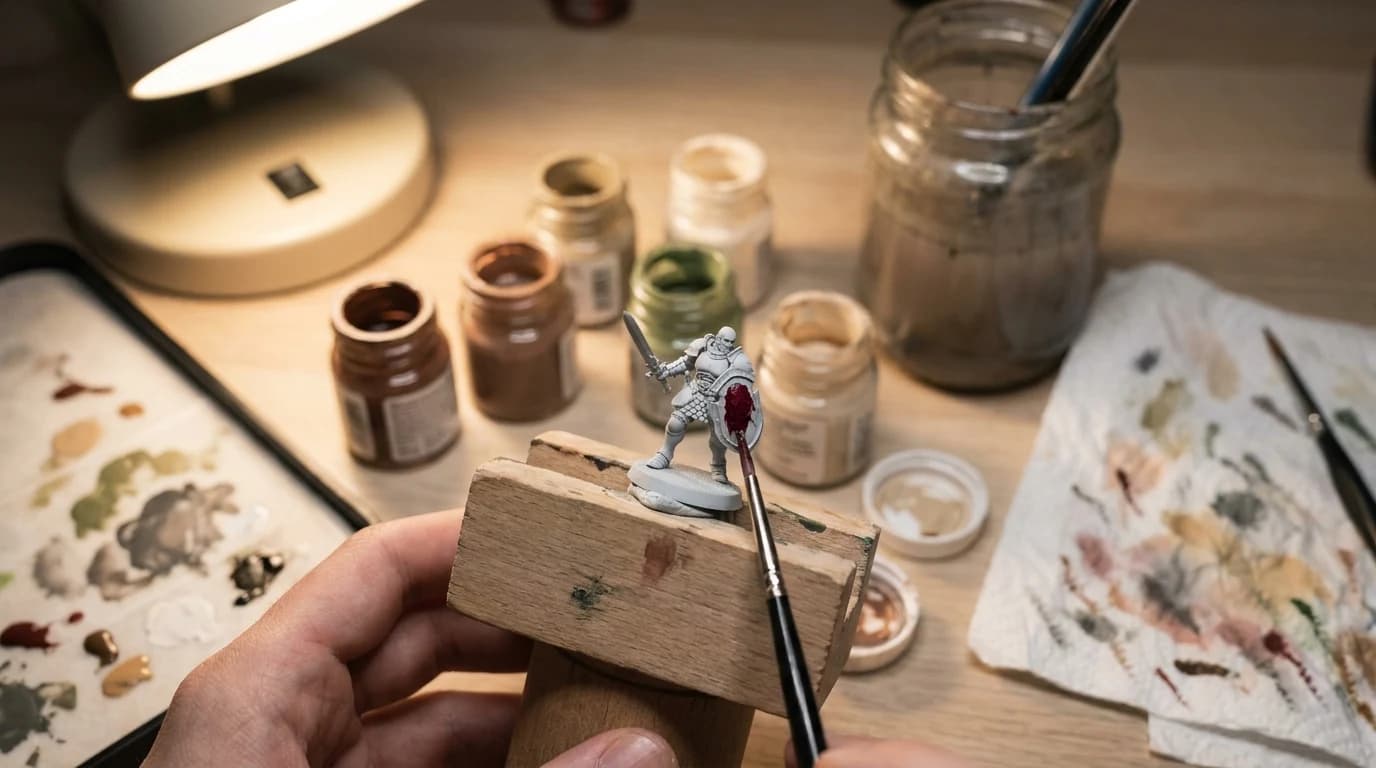
Undiluted acrylic goes on like frosting. It fills the sculpted lines, cracks as it dries, and leaves a flat, gummy look that no amount of shading rescues; this is the number-one beginner mistake hobby painters flag. So yes, thin toward the consistency of milk.
The variable is the brush, not the pot
Experienced painters will tell you the deeper truth: the real variable is how much paint rides on the brush and how hard you press, not just water in the pot. A brush loaded from belly to tip dumps a flood into the recesses the moment it touches plastic.
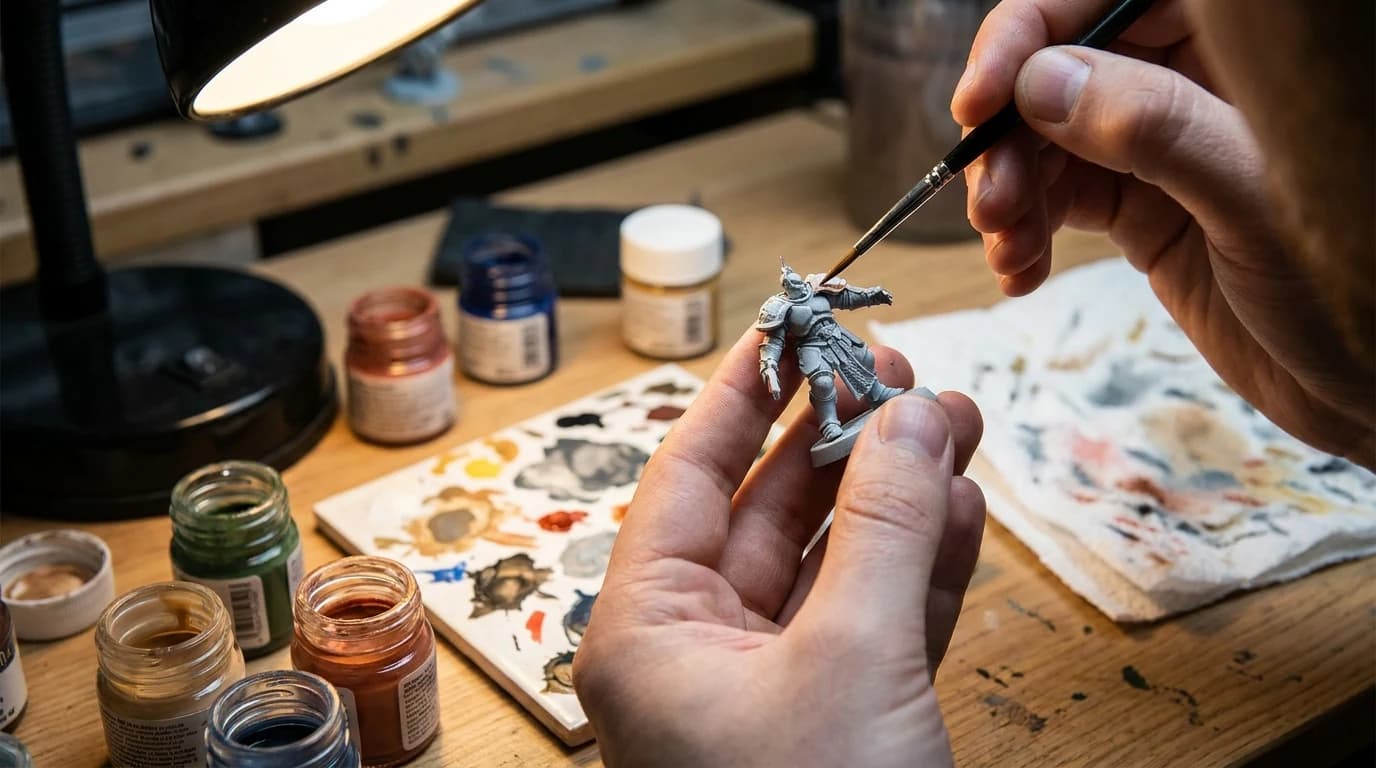
The single most useful move: load the tip, then wick the excess onto a paper towel before the brush ever meets the model. Do that and "thin your paints" mostly takes care of itself.
There is also a shortcut that sidesteps thinning entirely, covered next.
Two paths in: classic vs. speed
Beginners waste weeks agonizing over paint ranges. There are really only two starting approaches, and the right one depends on why you are painting.
| Classic (layer paints) | Speed (contrast / one-coat) | |
|---|---|---|
| How it works | Thin each color, build up in coats | One thick coat that shades itself in the recesses |
| Thinning needed | Yes, the core skill | Little to none; often straight from the pot |
| Time to tabletop | Slower, more control | A "battle ready" model in ~25 minutes is normal |
| Best for | Display pieces, learning the craft | Big armies, kids, "I just want them painted" |
| Watch out for | Thick-paint mistakes | Keep water out; it leaves watermark rings |
If your goal is a painted army on the table this month, start with speed paints. Manufacturer guidance is blunt about how fast they are: blocking in a base color "generally takes one coat straight out of the pot."
If your goal is to learn to paint well, start classic and accept a slower curve; there is no shortcut for time behind the brush.
The four steps that get a model tabletop-ready
Almost every good-looking tabletop mini is four moves, in order. You can stop after step three and still look sharp across a table.
| Step | What you do | Why it matters | Skippable? |
|---|---|---|---|
| 1. Prime | Spray or brush a thin primer coat (black, grey, or white) | Bare plastic repels paint; primer gives it grip | No |
| 2. Basecoat | Block in the main colors | Establishes the model's palette | No |
| 3. Shade / wash | Flow a dark wash over everything | Pools in the recesses, instantly adds depth | No, this is the cheat code |
| 4. Highlight / drybrush | Catch raised edges with a lighter tone | Makes detail pop up close | Yes, for tabletop |
Step three is the cheat code
A wash does automatically what would otherwise take a steady hand: it finds every crevice and draws a shadow there. Prime, basecoat, wash, and a raw grey mini reads as painted.
Speed paints collapse steps two and three into one: the pigment blocks in the color and settles darker in the recesses at the same time. That is the whole reason they exist.
The minimum kit (and what to skip)
You can start for well under the price of the miniatures themselves. Ignore anyone who says you need more on day one.
Buy:
- A can or pot of primer
- 4 to 6 core colors (or a small set of speed paints)
- One dark wash (if going classic)
- Two brushes: a size 1 for most work, a small detail brush
- A cheap palette: a ceramic tile or a wet palette
Skip for now:
- An airbrush (a whole second hobby; unnecessary to start)
- A 60-paint mega set (you will use six of them)
- Expensive sable brushes (you will chew through your first brushes learning)
- A spray booth, unless you are priming indoors in winter
Brush control and a wash will improve a model more than any gear purchase.
What the standard advice gets wrong
Three myths worth retiring:
"You need steady hands." You need to brace your hands. Rest your wrists on the table and rotate the model, not your arm. Bracing beats steadiness.
"Contrast paints are easy mode, so thin them too." Do not add water; it separates the pigment and leaves a dark watermark ring. Use a purpose-made medium if you must thin.
"Watch enough tutorials and you'll be good." No video replaces reps. The painters whose minis you admire have finished hundreds. Your first ten are supposed to look like first tries. Paint them anyway.
Bottom line
Pick one path: speed if you want an army painted fast, classic if you want to learn the craft. Prime, basecoat, wash, and stop there for tabletop. Keep the paint off the deep detail by controlling the brush, not just adding water.
Then paint the next one. The gap between a beginner and a "good" painter is almost never gear or talent; it is the count of models finished.
Once you have a system down, the next step is choosing what to paint: see our miniature wargame starter sets guide for the boxes that give you the most playable models per dollar, or the best model kits if you would rather build than field an army. If the figures are headed for a role-playing table instead, start from which D&D starter set to buy and paint what the adventure actually uses.
Sources
- Warhammer-Community, Contrast paint tips (one-coat basecoating; keep water away)
- Age of Miniatures, How to Thin Your Paints for Miniatures
- BoardGameGeek, "Thin your paints, and other lies we tell new painters"
Your next step