The Verdict
Key takeaways
- The decision is player count, not quality: BGG's community poll rates 7 Wonders Duel best at exactly two players from 1,535 votes, and rates the original best at four to five players from 2,570 votes.
- BGG users rate Duel 8.08 across 109,967 ratings (rank 24) and the original 7.66 across 113,368 ratings (rank 118), so neither is a weak game.
- Duel replaces the original's passed hands with a shared pyramid of face-up and face-down cards, so every card you take also decides what your opponent can reach.
- Duel adds two sudden-death wins, military and scientific supremacy, which is why it feels sharper despite near-identical BGG weights of 2.23 and 2.31.
- Buying the original for a strictly two-player household is the mistake this comparison exists to prevent; r/boardgames consistently reports that games designed for two beat multiplayer games downshifted to two.
On this page
Side-by-side comparison
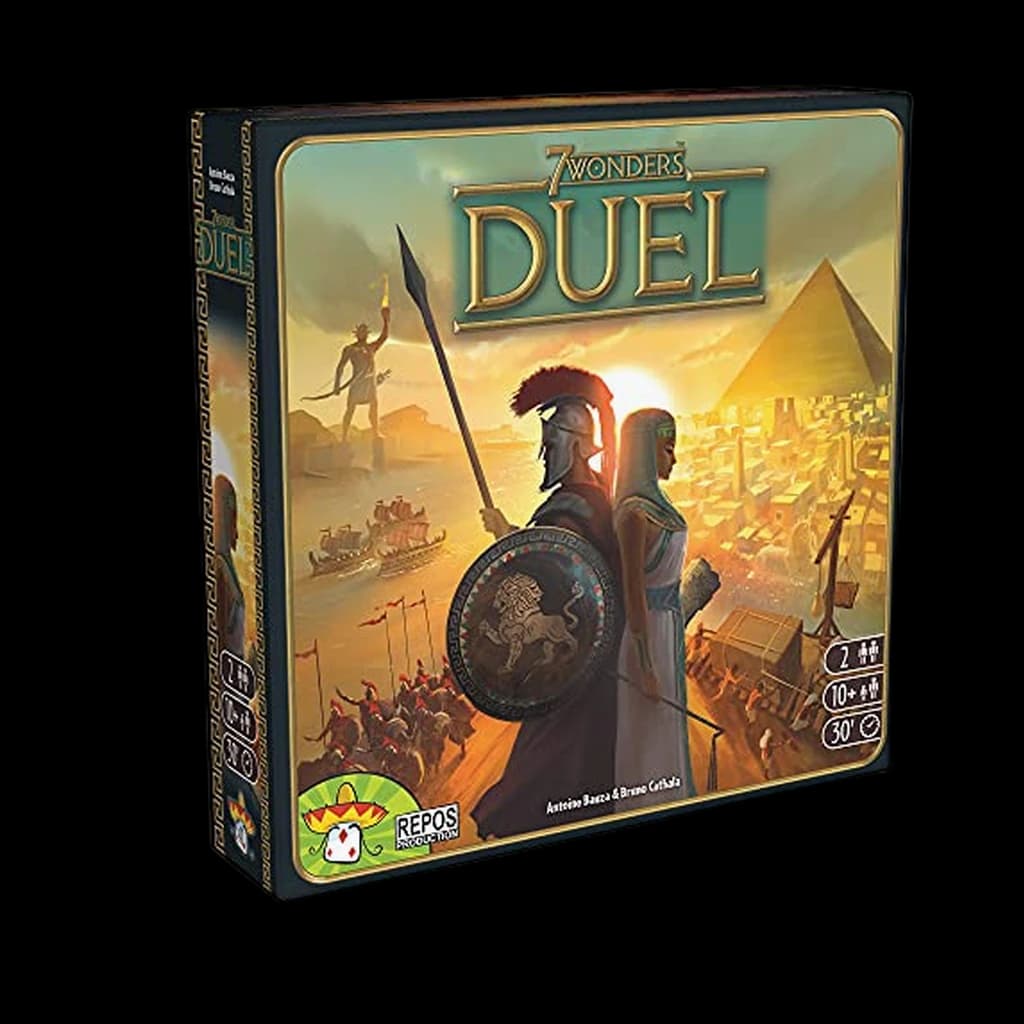
7 Wonders Duel
- Designed for two - tighter than scaled-down 7 Wonders
- Multiple paths to victory (military, science, civic)
- Different every game
One of the highest-rated two-player games of all time. It strips away the clunky dummy-player variant of the original and replaces it with a tight, tactical card-drafting pyramid.
Watch the top pick: 7 Wonders Duel
Video by a third-party creator, hosted on YouTube. Loads only when you press play.
The short version
Both games came from the same draftingdraftingCard-game mechanic where players pick one card from a hand then pass the rest to the next player. Repeated until the hand is empty. Core to 7 Wonders, Sushi Go, and pack-style TCG events. idea by the same designer, and BoardGameGeekBoardGameGeekThe definitive board game database and community. Scores, rankings, weight ratings, and forum discussion drive most enthusiast purchase decisions. The BGG Top 100 is the closest thing to a canon in the hobby. lists both at 30 minutes of play. The choice between them is not a quality argument. It is a seating-chart argument.
7 Wonders Duel is a two-player-only game. The original 7 Wonders is a 3-to-7-player game with a two-player variant tucked into the rulebook. BoardGameGeek's community polls back that split up from both directions, and they are the fastest way to settle the question before you spend anything.
| 7 Wonders Duel | 7 Wonders (original) | |
|---|---|---|
| Released / designers | 2015, Antoine Bauza and Bruno Cathala | 2010, Antoine Bauza |
| Player count | 2 only | 3 to 7, plus a 2-player variant |
| BGG best player count | Exactly 2 | 4 to 5 |
| Core mechanic | Draft from a shared pyramid of face-up and face-down cards | Pick a card, pass the rest of the hand to your neighbour |
| Playing time (BGG) | 30 minutes | 30 minutes |
| BGG weight (complexity) | 2.23 out of 5 | 2.31 out of 5 |
| BGG rating | 8.08 | 7.66 |
| BGG overall rank | 24 | 118 |
| How a game ends | Points after three ages, or an instant military or science win | Points after three ages |
| Expandability | Pantheon, Agora | Leaders, Cities, Armada |
| Footprint | Compact box, fits a coffee table or a tray table | Wide spread, wants a real table |
What the BGG polls actually say
BGG users rate 7 Wonders Duel 8.08 out of 10 across 109,967 ratings and rank it 24th overall. The original scores 7.66 across 113,368 ratings and ranks 118th. Those are both strong numbers on a site cataloguing tens of thousands of games, so neither is a bad buy.
The player-count poll is the number that decides your purchase. BGG's community poll rates Duel best at exactly two players, from 1,535 votes — the only count it offers. The same poll on the original names four to five players as its best count from 2,570 votes, and rates three through seven merely "recommended."
Read that second figure carefully. The community is not only saying the original is weak at two. It is saying two is not even the argument: three is not its sweet spot either.
Rule of thumb: the BGG player-count poll answers "how many people should be sitting here," which is the same question as "which box should I buy." Two says Duel. Four to five says the original.
The three differences that actually decide it
1. A shared pyramid replaces the passed hand
In the original, every player holds a hand, keeps one card, and passes the remainder to a neighbour. That loop is the engine of the game, and it needs a circle. At two players the rulebook substitutes a neutral third city that both players take turns operating — a real rules structure, not a fan patch, but one that adds bookkeeping to a game whose selling point was having none.
Duel deletes the loop entirely. Every card for an age is laid out on the table in a pyramid, some face up and some face down, and you may only take a card that nothing is covering. Taking a card reveals what sits underneath it, so half of every decision is what you are handing your opponent. That is a fundamentally different tactical problem from choosing between seven cards in your hand.
2. Duel gives you two ways to lose on the spot
The original runs three ages and then counts points. Duel keeps that path and adds two sudden-death conditions: military supremacy, by pushing the conflict marker all the way into the opponent's capital, and scientific supremacy, by collecting six different science symbols. Either one ends the game immediately, mid-age, regardless of who leads on points.
This is why the two games feel so different despite almost identical BGG weights — 2.23 against 2.31 on a 1-to-5 scale. The rules load is the same. The attention load is not. In Duel you cannot build quietly, because a player ignoring military while their opponent stacks shields can lose in a single turn.

3. The original's best feature is the table itself
7 Wonders was designed so seven people can play in 30 minutes, because everybody drafts simultaneously and nobody waits. Its interaction is ambient — you watch neighbours on both sides while competing for military and science against the whole table. Cut the table down to two and you have removed the thing the design was for. That is not a flaw; it is what "best at 4 to 5" means.
The verdict, by situation
| Your table | Buy | Why |
|---|---|---|
| Always exactly two | 7 Wonders Duel | Purpose-built for two; BGG's poll rates it best at exactly that count |
| Regularly three to seven | 7 Wonders | The simultaneous draft is why it exists, and it peaks at 4 to 5 |
| A couple who hosts a game night a few times a year | 7 Wonders Duel | Buy for the fifty plays, not the two |
| Two players who want the bigger box eventually | 7 Wonders Duel first | It stays relevant even after the original arrives |
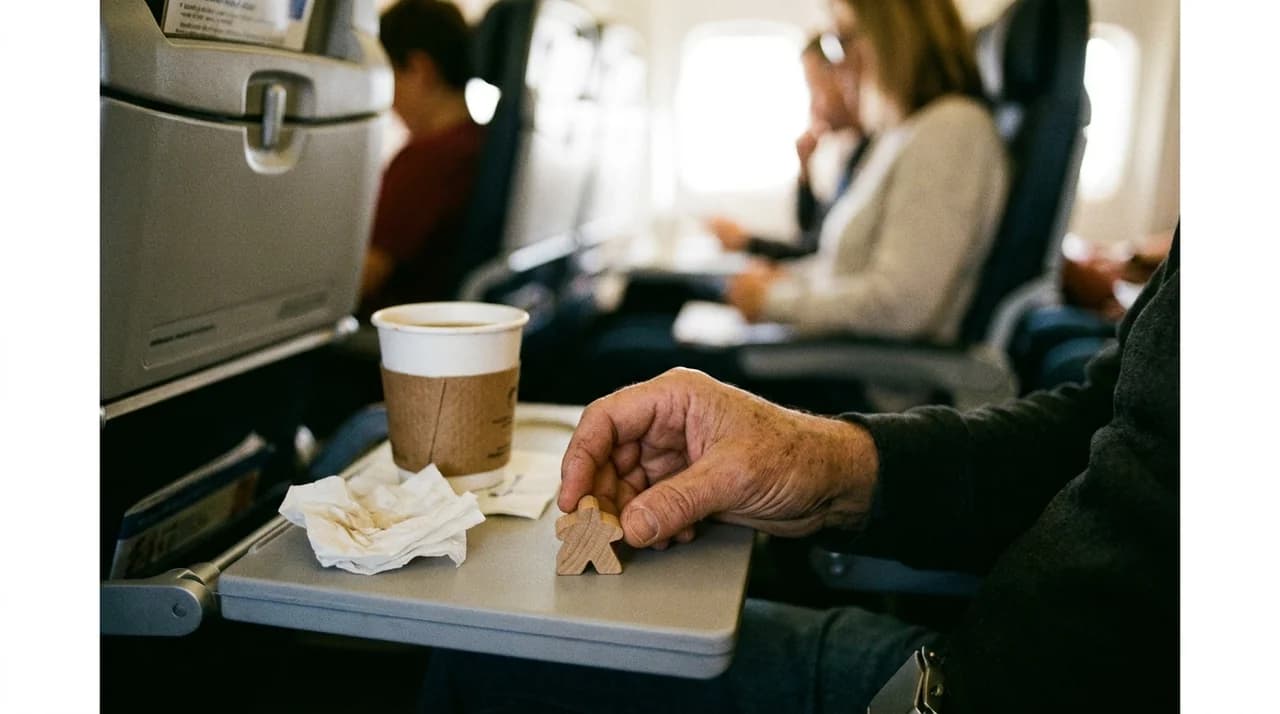
| Travel, small coffee table, tray table | 7 Wonders Duel | Compact box, no wide spread, 30 minutes |
If your table is always two, buy Duel and stop reading
No scenario has the original's two-player variant beating a game designed for the count. Ratings, polls and community all point the same way here.
If three to seven is your normal, buy the original
Duel physically cannot seat a third person. If your default evening involves four people, the original is the right box, and its 118th-place overall rank badly undersells how well it does the job it was built for.
If you are a couple who occasionally hosts, still buy Duel
The math is play count, not player count. A game two people play weekly earns its shelf space in a month; a game that comes out twice a year does not. For the occasional larger night, a party or word game gets a mixed group playing faster than a drafting game you have to teach — see our best gateway board games for that shelf.
What buying the original "for two" actually gets you
What the two-player variant genuinely does:
- Lets two people play the game at all, with official rules rather than a house fix
- Keeps the three-age structure and the full card set intact
- Gives you a box that still works when guests arrive
What it does not do:
- Remove the third city both players have to operate on top of their own
- Restore the neighbour-vs-neighbour tension military and science are built around
- Make the game shorter, smaller, or easier to set up on a coffee table
- Change BGG's poll, which puts the original's best count at 4 to 5
Where each one falls down
Neither box is flawless, and the honest failure modes are different.
Where 7 Wonders Duel disappoints:
- It rewards knowing the deck. Specific cards counter specific strategies, and a first game against an experienced opponent can end early to a science or military rush the new player never saw building.
- The one recurring complaint on r/boardgamesr/boardgamesLargest board game subreddit (~3M members). The 'What did you play this weekend' weekly thread is a strong real-purchase signal — citations there indicate genuine ownership, not just hype. is not about the base game at all: it is that the Pantheon expansion's extra-turn wonders distort the draft. Start with the base box.
Where 7 Wonders disappoints:
- Bought for a strictly two-player household, it is simply the wrong purchase — the exact scenario this comparison exists to prevent.
- The r/boardgames consensus is blunt about the whole category: games designed for two consistently beat multiplayer games downshifted to two, and boxes with a bolted-on two-player variant generate the most buyer disappointment.
- Shoppers reach for the box that scales 2 to 7 because it looks like more game for the money; the community's repeated experience is that the purpose-built duel delivers the better evening.
The trap: buying the famous box because it is the famous one, then only ever playing it as a couple. That is precisely the scenario the two-player variant exists to rescue, and it is the weakest possible introduction to a genuinely great game.
If you want the wider field before committing, we ranked the category in the best two-player board games, and the full shelf lives in two-player board games.