Key takeaways
- A real starter set is a complete first campaign in a box. If there is no adventure inside, it is a rulebook wearing a starter set's box.
- The D&D Essentials Kit is the 2026 pick - it is the only 2014-rules D&D box still in print at its normal price, and the only one that also teaches character creation.
- Pathfinder 2e is the choice when a table wants deeper mechanics: richer character options, a higher rules ceiling.
- The 2014 D&D Starter Set still has the best first campaign, but it is out of print and sold only by resellers. Heroes of the Borderlands is the current D&D starter for the 2024 rules.
- Buy one system and finish its campaign before buying a second. Two boxes at once is the most common way a new group stalls.
On this page
Side-by-side comparison
The friendliest way into tabletop RPGs — a complete boxed intro adventure with dice, maps and a rulebook built specifically for first-time Dungeon Masters.
- Brand
- D&D
Best evidence
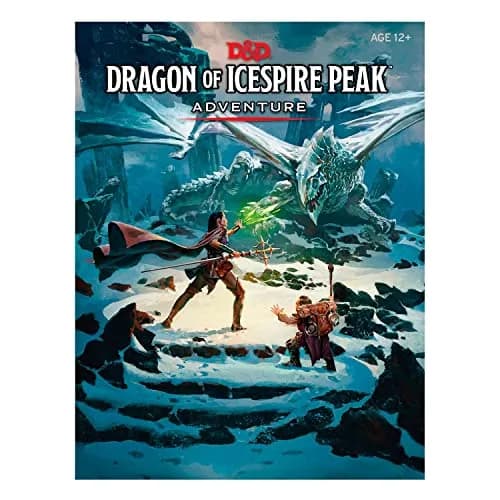
Dragon of Icespire Peak—an adventure for characters levels 1–6
Main trade-off
The included adventure caps at level 6 — continuing play needs the core rulebooks
Deeper rules than D&D 5e for fans of system complexity.
- Entry Type
- Beginner Box
- Pages
- Pamphlet + booklets
- GM Difficulty
- Beginner-friendly tutorial
- Setting
- Pathfinder Lost Omens
Best evidence
Deeper rules system than 5e
Main trade-off
More complex than 5e - steeper learning curve
Wizards of the Coast's current D&D starter box and the only one built for the 2024 rules - three adventure booklets and card-driven character creation.
- Entry Type
- Starter Set
- Rules
- 2024 revision
- Players
- 3-5 (one as Dungeon Master)
- Adventures
- 3 booklets
Best evidence
Three adventure booklets with dozens of encounters across combat, social interaction and exploration
Main trade-off
Teaches the 2024 rules - a player joining a 2014 5e group learns a slightly different game
1980s sci-fi nostalgia TTRPG with Simon Stålenhag art.
- Entry Type
- Core Rulebook
- Pages
- 192
- GM Difficulty
- Story-driven, low rules
- Setting
- 1980s alternate-Sweden Loop
Best evidence
Iconic Simon Stålenhag art
Main trade-off
Niche compared to D&D
Critical Role lore in canonical setting book.
- Entry Type
- Campaign Setting
- Pages
- 256
- GM Difficulty
- Intermediate
- Setting
- Exandria / Tal'Dorei
Best evidence
Critical Role canonical campaign setting
Main trade-off
Requires base D&D 5e knowledge
* Prices are approximate. Tap Buy to see current pricing on Amazon.
| Comparison field | #1D&D Essentials Kit (Dungeons & Dragons Intro Adventure Set) Owner rating | #2Pathfinder 2e Beginner Box Owner rating | #3D&D Starter Set: Heroes of the Borderlands Owner rating | #4Tales from the Loop RPG Owner rating | #5Critical Role: Tal'Dorei Campaign Setting Reborn Owner rating |
|---|---|---|---|---|---|
 |  |  |  |  | |
| CurioRank | |||||
| Verdict | The friendliest way into tabletop RPGs — a complete boxed intro adventure with dice, maps and a rulebook built specifically for first-time Dungeon Masters. | Deeper rules than D&D 5e for fans of system complexity. | Wizards of the Coast's current D&D starter box and the only one built for the 2024 rules - three adventure booklets and card-driven character creation. | 1980s sci-fi nostalgia TTRPG with Simon Stålenhag art. | Critical Role lore in canonical setting book. |
| Price | |||||
| Brand | D&D | - | - | - | - |
| Entry Type | - | Beginner Box | Starter Set | Core Rulebook | Campaign Setting |
| Pages | - | Pamphlet + booklets | - | 192 | 256 |
| GM Difficulty | - | Beginner-friendly tutorial | - | Story-driven, low rules | Intermediate |
| Setting | - | Pathfinder Lost Omens | - | 1980s alternate-Sweden Loop | Exandria / Tal'Dorei |
| Rules | - | - | 2024 revision | - | - |
| Players | - | - | 3-5 (one as Dungeon Master) | - | - |
| Adventures | - | - | 3 booklets | - | - |
| Session Length | - | - | About an hour | - | - |
| Buyer sentiment | Starter Level Quality Value for money Fun Buyers praise starter level, quality, value for money and fun. Based on 990 user mentions | Content Game content Value for money Adventure Buyers praise content, game content, value for money and adventure. Based on 122 user mentions | - | Age-appropriate Gameplay Artwork Content Condition Buyers praise age-appropriate, gameplay, artwork and content. Some flag condition. Based on 42 user mentions | - |
| Pros |
|
|
|
|
|
| Cons |
|
|
|
|
|
* Prices are approximate. Click Buy to see current pricing on Amazon.
D&D Essentials Kit (Dungeons & Dragons Intro Adventure Set)
- Dragon of Icespire Peak—an adventure for characters levels 1–6
- Dungeon Master’s screen
- Fold-out poster map, 6 blank character sheets, and 11 polyhedral dice
A complete first adventure, character-creation rules with blank sheets, and sidekick rules that run the campaign with a single player - and the only 2014-rules D&D box still in print at starter-set money.
The short version
For a table with nobody who has played an RPG before, get the D&D Essentials Kit: a complete first adventure in Dragon of Icespire Peak, character-creation rules with blank sheets, and sidekick rules that let the campaign run with a single player. It is the only 2014-rules D&D box still in print at its normal price - $30.46 on Amazon on 2026-09-02. The 2014 D&D Starter Set has the better adventure and was this page's pick for two years, but it is out of print and sold on Amazon only by resellers; if your table wants the 2024 rules, its replacement, Heroes of the Borderlands, is the current D&D starter at $39.95. If your group wants deeper character options and does not mind a steeper rules curve, get the Pathfinder 2e Beginner Box. If you want story-driven play that is not dungeon crawling, Tales from the Loop is the indie standout.
Rule of thumb: a real starter set ships with a complete first adventure. Without one it is an introductory rulebook wearing a starter set's box - and that difference is what decides whether a group ever gets to session two.
Already decided on D&D and only need to know which box? That is a different question with four answers, and we answer it separately in which D&D starter set to buy.
The 5 picks, ranked
| Pick | System | Complete adventure in the box | Best for |
|---|---|---|---|
| D&D Essentials Kit | D&D 5e | Dragon of Icespire Peak | Two players, or character creation |
| Pathfinder 2e Beginner Box | Pathfinder 2e | Menace Under Otari | Crunch-curious tables |
| D&D Starter Set: Heroes of the Borderlands | D&D (2024 rules) | Three adventure booklets | Tables learning the 2024 rules |
| Tales from the Loop | Year Zero Engine | Four mysteries | Story-first indie play |
| Tal'Dorei Reborn | 5e-compatible | No - setting book | Critical Role fans, second purchase |
1. D&D Essentials Kit - best for brand new tables in 2026
Check price on Amazon · $30.46 →Full review →The D&D box we now send new tables to, and the only 2014-rules starter still in print at starter-set money ($30.46 on 2026-09-02). It carries character-creation rules and blank sheets, a DM screen, and sidekick rules written so one player and one DM can run the adventure together - the gap the older Starter Set never closed. Its campaign, Dragon of Icespire Peak, is a quest-board structure rather than one long thread, which suits a table that cannot commit to the same five people every week. If your group is two people, or somebody will be disappointed not to design their own character, this is the box.
2. Pathfinder 2e Beginner Box - best for crunch-curious tables
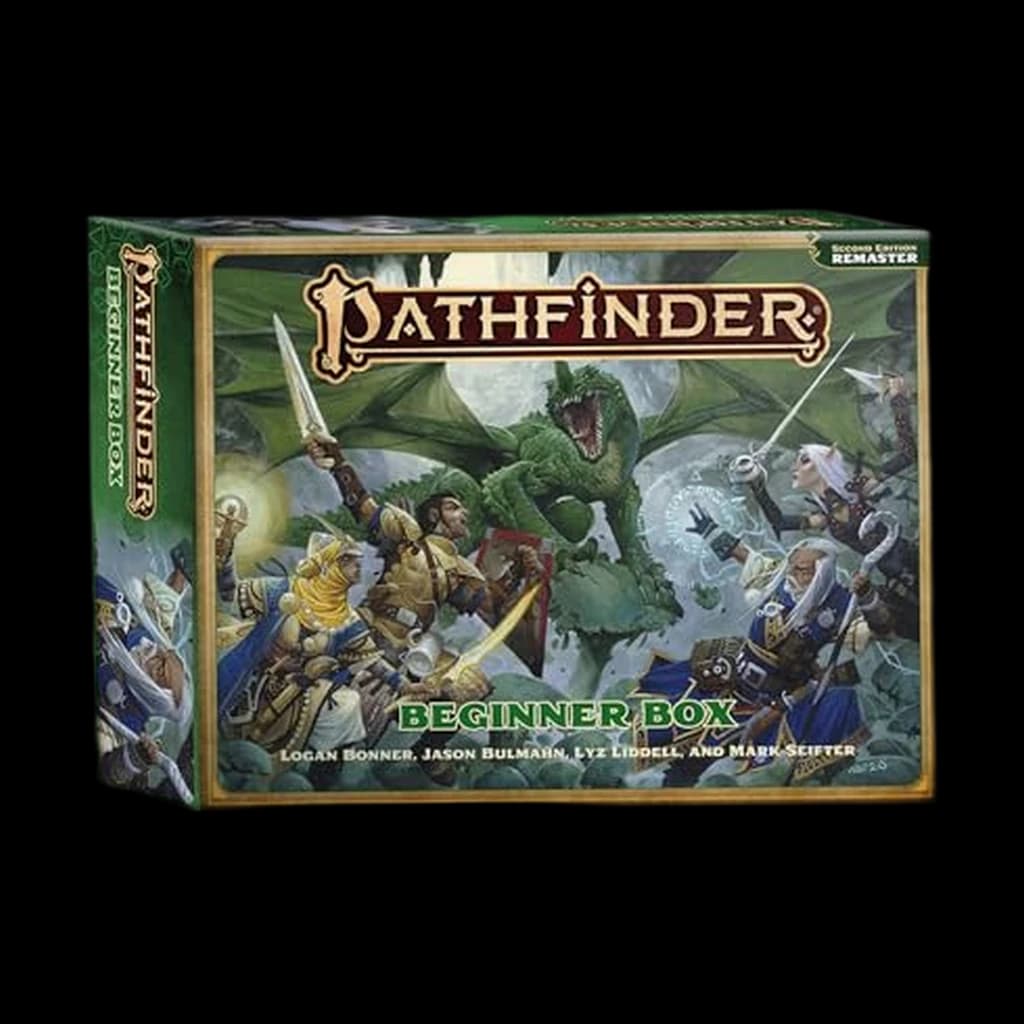
Check price on Amazon · $52 →Full review →Paizo's Pathfinder 2e is where a lot of D&D players go when they want more mechanical depth. The Beginner Box is structured like D&D's - pre-built characters, complete adventure, just enough rules - but the underlying system gives every character far more meaningful build choices. Steeper learning curve, higher ceiling, and Menace Under Otari in the box to spend it on.
3. D&D Starter Set: Heroes of the Borderlands - best for the 2024 rules
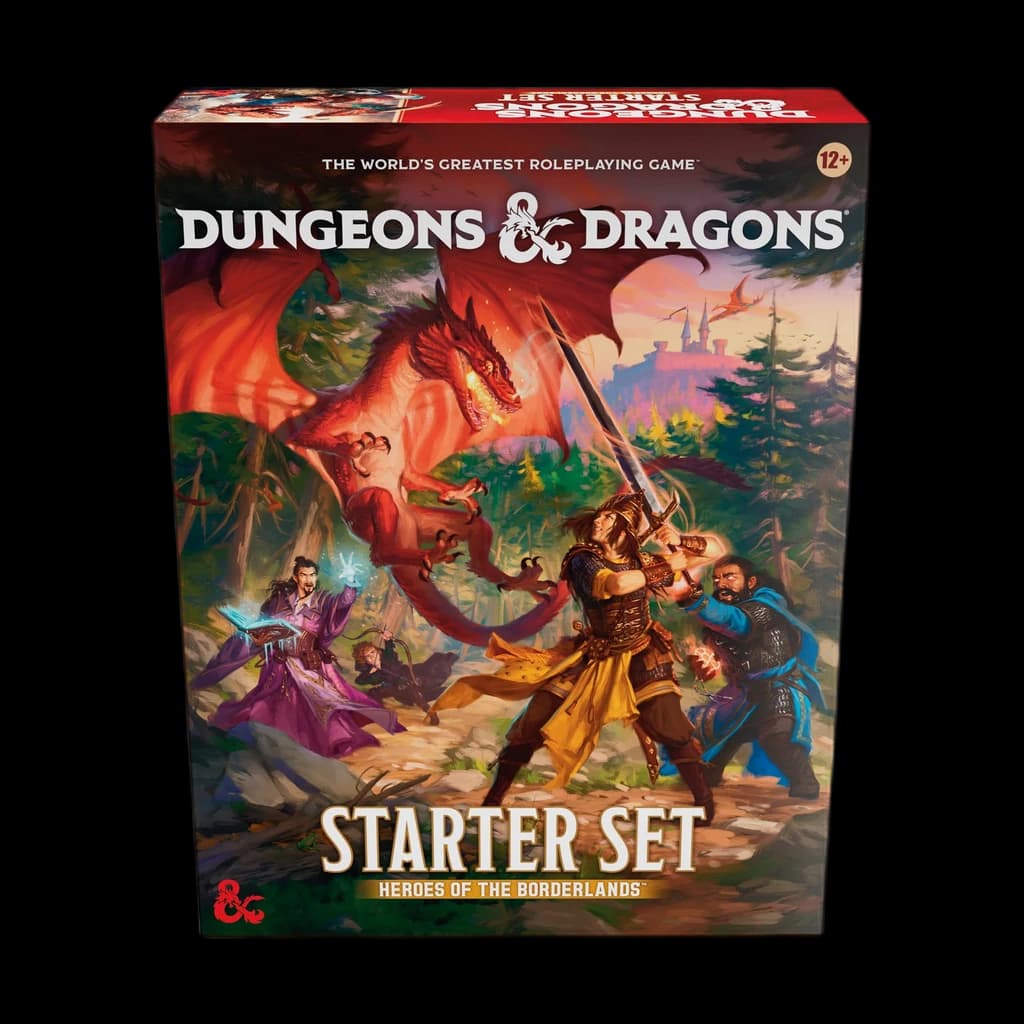
Check price on Amazon · List Price:Wizards of the Coast's current starter set, and the D&D box to buy if your table is learning the 2024 rules. It is the most component-heavy starter D&D has made - three adventure booklets, eight character class boards, nine double-sided poster maps, eleven dice, 210 cards and 273 tokens - and character creation runs through the cards, so nobody spends the first night reading a rulebook. The adventures are built for hour-long sessions. Amazon sells and ships it directly at $39.95.
- Best for: tables learning the 2024 rules, or players joining a group that already uses them
- Not for you if: your group plays 2014 5e, or there are only two of you - the Essentials Kit's sidekick rules cover that
What happened to the 2014 Starter Set? The Lost Mine of Phandelver box that led this page for two years is out of print, and Amazon now carries it only from third-party resellers at several times its old price. It is still the better campaign; it is no longer a box we can send a new table to.
4. Tales from the Loop RPG - best indie pick
Check price on Amazon · List Price:Free League built this RPG around Simon Stålenhag's artwork: small-town 1980s alternate history, weird science breaking through, kids on bikes solving mysteries. Mechanically much lighter than D&D, story-first, and explicitly designed so player characters cannot die. If the table wants Stranger Things rather than dungeon crawling, this is the pick.
5. Critical Role: Tal'Dorei Campaign Setting Reborn - best for fans of the show
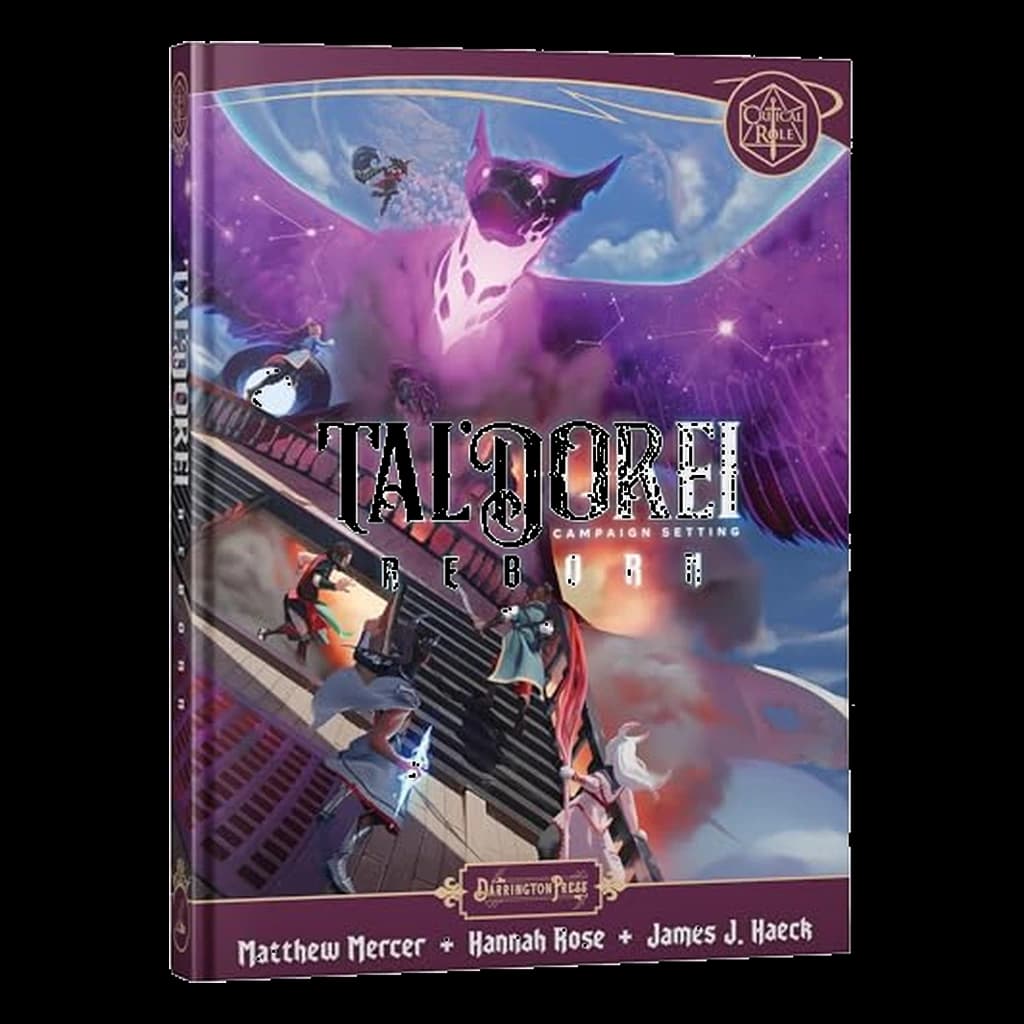
Check price on Amazon · List Price:Included here because people shop for it alongside starter sets, with the honest caveat that it is not one. It is a 5e-compatible campaign setting built around the world of Critical Role's first campaign, and it assumes your table already knows how to play. Buy it second, not first.
What actually separates a starter set from a rulebook
Pre-generated characters are the whole ballgame
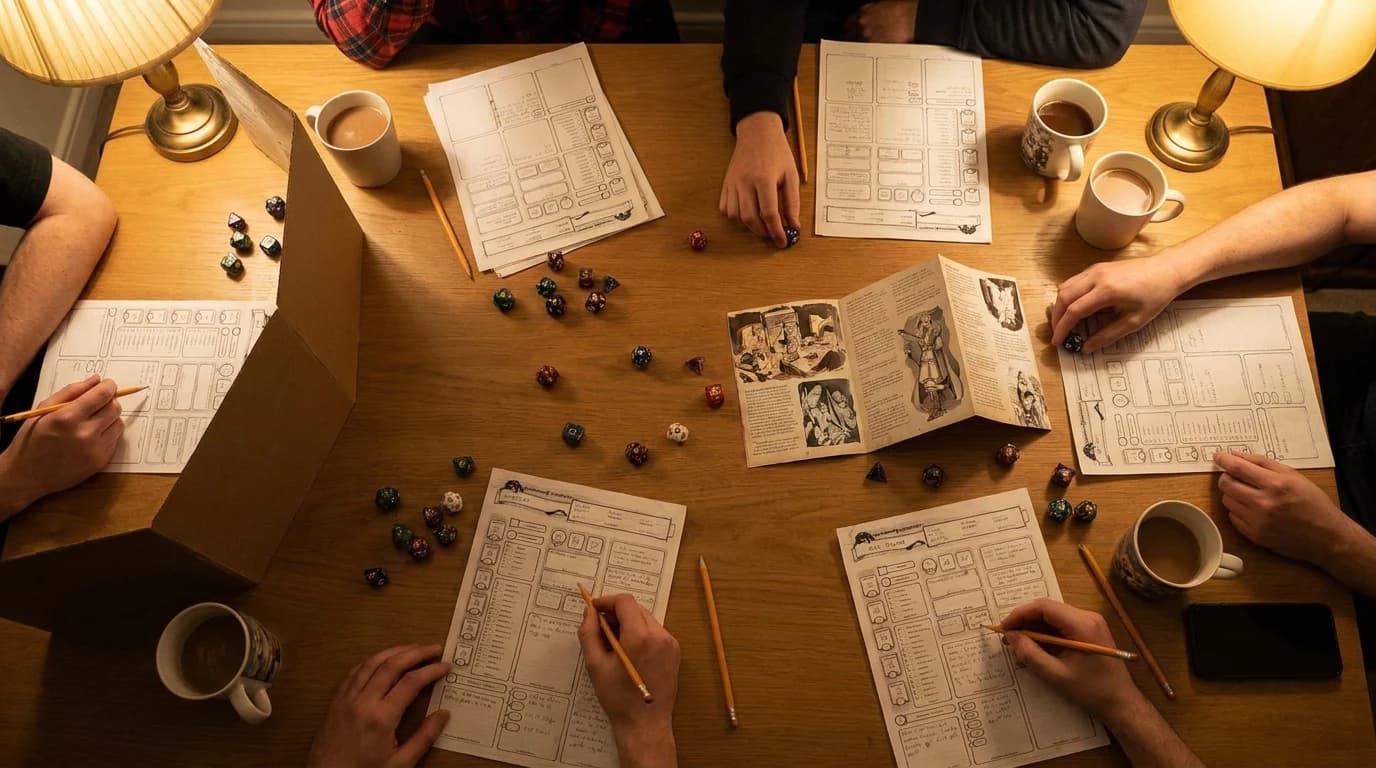
Brand new groups who spend an entire first session building characters often never come back for a second. The D&D and Pathfinder starter sets both ship with ready-made characters for exactly this reason, and it is the single most reliable predictor of whether a group plays twice.
The GM does the heaviest lifting
Whoever runs the game needs to be the person most willing to read ahead. Starter-set adventures are paced, prepped and full of read-aloud text specifically to lighten that load - Lost Mine of Phandelver runs 8 to 12 sessions, and Pathfinder's box ships Menace Under Otari.
The mistake that stalls a new group
The most expensive first order is not the most expensive box - it is two boxes. Buying D&D and Pathfinder to compare them, or adding the Player's Handbook to the first order, splits a group's attention before anyone has finished a single adventure. Both systems take upward of 20 hours of play to feel comfortable in, and the comparison you are trying to run cannot be answered in one session of each.
What gets a group playing:
- One system, one starter set, one complete adventure, finished
- A GM who reads the next chapter before the session
- Ready-made characters on night one
What stalls a group before session two:
- Two systems bought at once, so neither campaign gets finished
- A rulebook added to the first order instead of an adventure
- A starter set with no adventure in the box - a setting book, a lore hardback, or a dice-and-screen bundle
Worth knowing: a setting book like Tal'Dorei Reborn and a rulebook like the Player's Handbook are both good purchases in the wrong order. Neither one tells a new GM what happens on Tuesday night.
Which D&D box, specifically?
D&D alone has four current start-here boxes running two different rules editions, and only two of them include character creation. The D&D starter set comparison works through Starter Set versus Essentials Kit versus Heroes of the Borderlands, and names the one to skip.
Heroes of the Borderlands is the box built for the 2024 rules revision, streamlined around four classic species and four core archetypes. Shadowdark RPG is the indie breakout on the other side of the same shelf - stripped-down, 5e-adjacent, with real-time torches and much harsher dungeon scarcity.
Solo, two-player and family tables
Most starter sets assume three to five players plus a GM. Below that:
- Solo: Ironsworn is the standard - built from the ground up for solo or co-op play, no GM required.
- Two people: the D&D Essentials Kit, whose sidekick rules cover a single player and one DM, or the Pathfinder 2e Beginner Box, which explicitly supports a one-PC start.
- Under 11: Amazing Tales is the right entry - a short rulebook, no character sheets, story-first, designed for a parent to run.
- Ages 10 and up: Tales from the Loop, or the Essentials Kit if the family specifically wants the D&D experience.
More of what we rank in this space sits in tabletop RPGs.
One accessory worth adding
Every box above includes dice, so a separate set is an addition rather than a requirement - but it is the accessory players buy first once the campaign sticks. The Haxtec Metal DnD Dice Set is the affordable entry into metal dice: weighty, legible and gift-boxed, and it scores 89 in our full review. The rest of what we rank is in RPG dice sets.
Your next step