Quick Answer
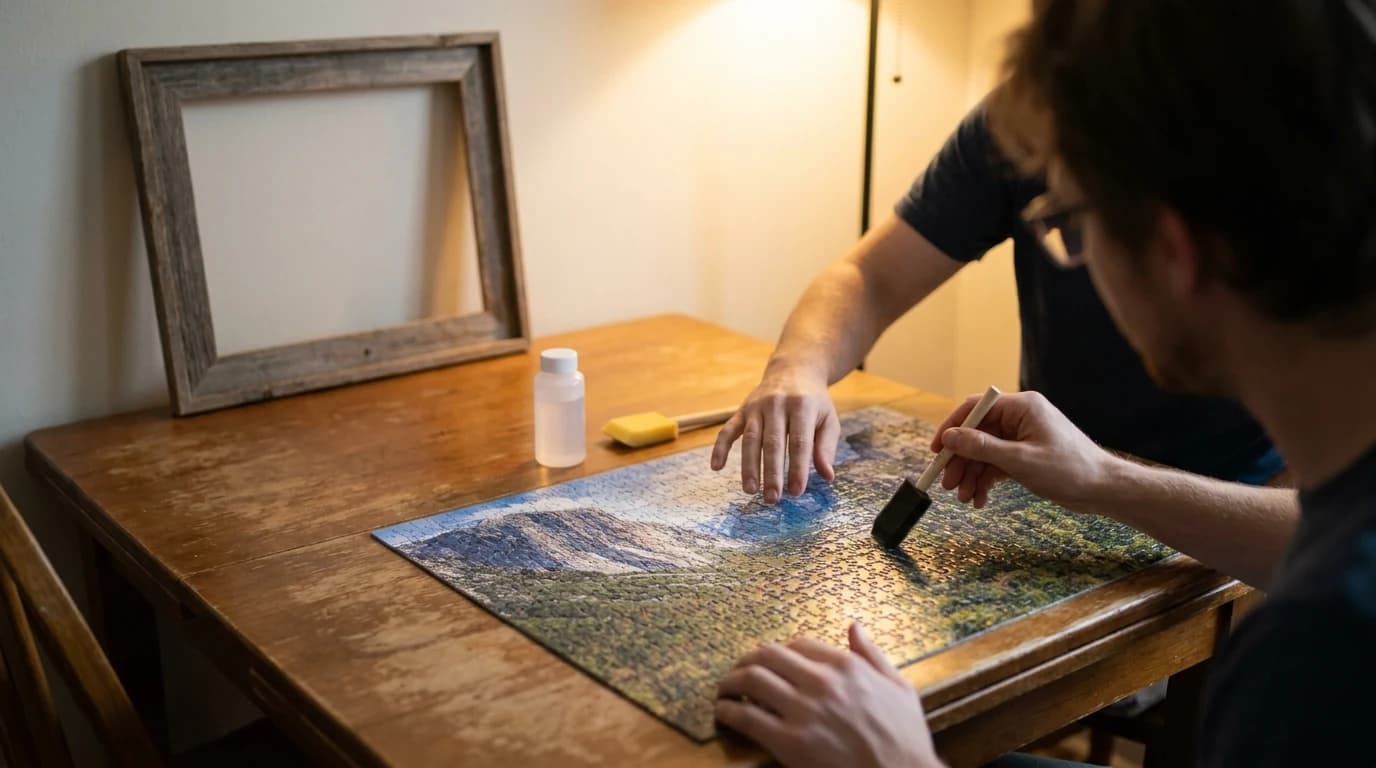
Brush or sponge a puzzle glue such as Ravensburger Puzzle Conserver or Mod Podge Puzzle Saver onto the picture side and wait out the label's dry time, or press peel-and-stick sheets onto the back if you want the image untouched. Both are permanent, so skip glue on any puzzle you might redo. Then measure the finished puzzle itself before buying a frame: two 1000-piece puzzles can differ by most of an inch.
Key takeaways
- The glue makers put liquid glue on the picture side: Ravensburger's conserver goes on with a sponge applicator, and Mod Podge Puzzle Saver brushes on as glue, sealer and finish in one.
- Dry and cured are different: Ravensburger says its conserver is dry in an hour, while Plaid puts Mod Podge at 15 to 20 minutes to the touch and about 28 days to fully cure.
- Peel-and-stick sheets go on the back and leave the image surface as it was; Buffalo Games' pack of six covers up to 29 x 21.5 in.
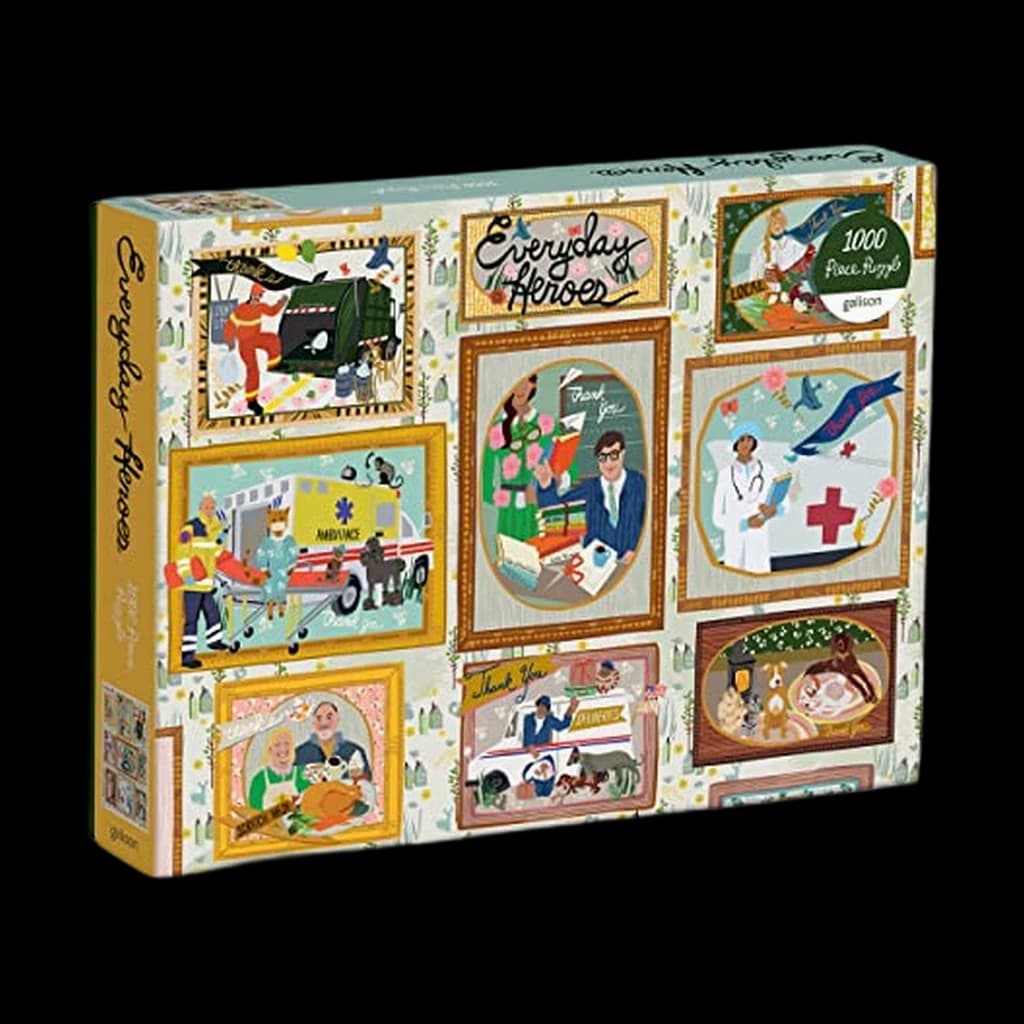
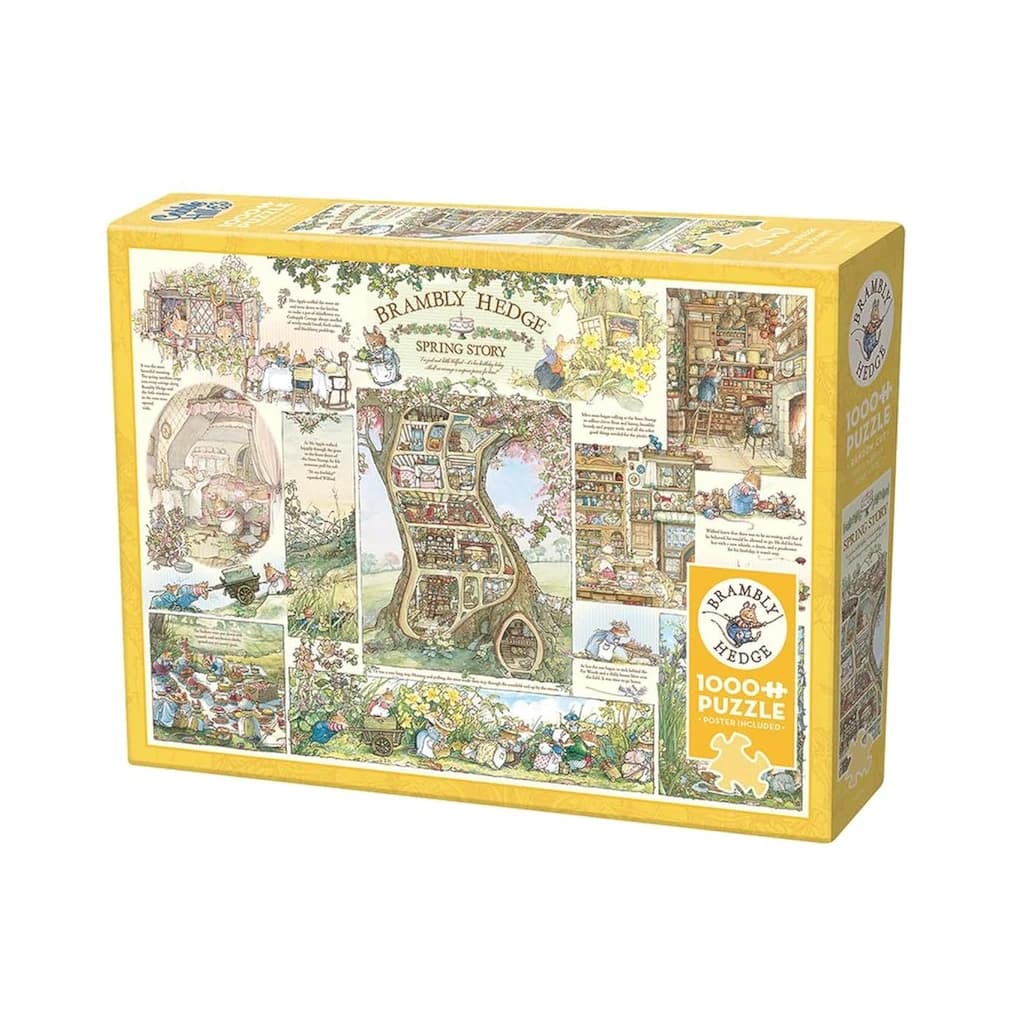
- A 1000-piece puzzle has no standard size: Galison's standard is 20 x 27 in, while Cobble Hill lists its Brambly Hedge Spring Story at 26.625 x 19.25 in.
- Flip a glued puzzle between two boards, mount it on a backing board, and measure the mounted puzzle before choosing a frame.
- Glue and adhesive sheets are both permanent, so leave any puzzle you might redo unglued.
On this page
Side-by-side comparison
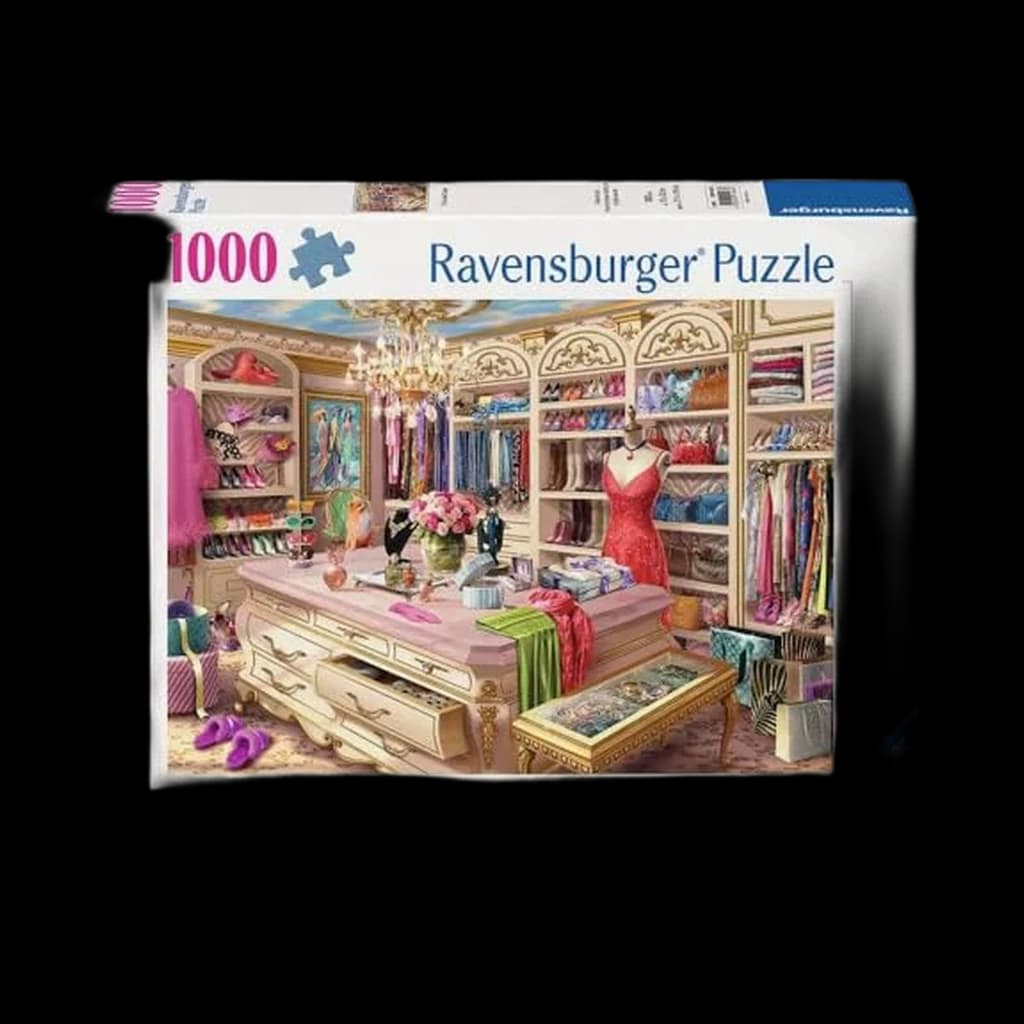
The design-forward 1000-piece pick - Galison's illustrative art makes the finished puzzle worth framing.
The puzzler's-favorite 1000 - random-cut, linen-finish pieces that feel a cut above the big-box brands.
* Prices are approximate. Tap Buy to see current pricing on Amazon.
#1Galison Everyday Heroes 1000-Piece Puzzle 4.7 | #2Cobble Hill Brambly Hedge 1000-Piece Puzzle 4.5 | |
|---|---|---|
 |  | |
| CurioRank | ||
| Verdict | The design-forward 1000-piece pick - Galison's illustrative art makes the finished puzzle worth framing. | The puzzler's-favorite 1000 - random-cut, linen-finish pieces that feel a cut above the big-box brands. |
| Price | ||
| Pros |
|
|
| Cons |
|
|
* Prices are approximate. Click Buy to see current pricing on Amazon.
Glue a finished jigsaw puzzle on the picture side with a puzzle glue, following the label's drying time, or press adhesive sheets onto the back if you want the image untouched. Then measure the actual finished puzzle before you buy a frame, because "1000 pieces" is not a size. And if there's any chance you'll want to do it again, don't glue it at all.
That's the whole decision. The rest of this guide is how to do each step without cracking, warping or mis-sizing the thing you spent a week on.
Pick your method first
Every option below is permanent except the last one, so this is the choice that matters.
| Method | Mess | Reversible? | Best for |
|---|---|---|---|
| Liquid glue on the picture side | Wet: sponge or brush, paper underneath | No | Hanging it, framed or unframed, with a sealed surface |
| Peel-and-stick sheets on the back | Low: no liquid | No (permanent adhesive) | Keeping the image surface exactly as it came out of the box |
| No glue, framed with backing pressure | None | Yes | A puzzle you might redo, or a frame you can open |
| No glue, no frame | None | Yes | Anything you plan to break up and pass on |
The one rule: the glue maker's label wins. Drying and cure times differ a lot between products, and the only reliable number is the one printed for the bottle in your hand.
What the glue makers actually say
We read the manufacturer pages for three widely sold products. None of them tells you to brush liquid glue on the back; the two liquids go on the image, and the sheets go on the reverse.
| Product | Where it goes | Dry time (maker's figure) | Worth knowing |
|---|---|---|---|
| Ravensburger Puzzle Conserver Permanent | Picture surface, via the bottle's sponge applicator | Dry after one hour, then ready for framing | 200 ml covers about four 1000-piece or eight 500-piece puzzles |
| Mod Podge Puzzle Saver Matte (also sold in gloss) | Brushed on; glue, sealer and finish in one | Touch-dry in about 15 to 20 minutes; about 28 days to fully cure | Goes on milky white and turns clear as it sets; cleans up with soap and water |
| Buffalo Games Puzzle Presto! Peel & Stick | Back of the puzzle | No drying; Buffalo says it takes minutes | Six 15 x 7.5 in sheets cover up to 29 x 21.5 in, with two stick-on hangers |
The Mod Podge gap between "dry" and "cured" is the one that catches people. Plaid says to limit heavy handling and keep water off it during the roughly four-week cure, so a puzzle that feels dry can be framed, but shouldn't be leaned against, stacked or wiped for a few weeks.
The glue-and-frame routine, in seven steps
- Finish on a surface you can live without for a day. Slide wax or baking paper under the puzzle before gluing, so anything that seeps through the seams bonds to the paper, not the table.
- Flatten it. Run your palm across the whole puzzle and press down any piece sitting proud. A raised edge glued in place stays raised forever.
- Apply a thin, even coat on the picture side. Work it into the seams between pieces and avoid pools. Heavy spots dry slowest and soak the most glue into the board.
- Wait out the label's time, flat. One hour for the Ravensburger conserver, per Ravensburger. For Mod Podge, touch-dry comes fast but full cure takes weeks.
- Flip it as a sandwich. Lay a sheet of cardboard or a board on top, hold both layers, and turn the whole stack over. Never lift a glued puzzle by one edge.
- Back it. Mount it on a stiff backing board. Galison's framing advice is the same order: glue or adhesive sheets, backing board, then frame.
- Measure, then frame. Measure the mounted puzzle itself, not the box, and buy to that number.
If it warps anyway: press it flat under a board and something heavy once the glue is fully dry, and use a thinner coat next time. The less liquid the board absorbs, the flatter it dries.
The frame-size problem
A "1000-piece" label tells you nothing about the finished size. Two 1000-piece puzzles from our catalog, with each maker's own figure:
| Puzzle | Maker's finished size | Against a 20 x 27 in opening |
|---|---|---|
| Galison Everyday Heroes 1000-Piece | 20 x 27 in (508 x 686 mm), Galison's standard 1000 | Exact fit |
| Cobble Hill Brambly Hedge Spring Story 1000-Piece | 26.625 x 19.25 in assembled, per Cobble Hill | 3/8 in short on the long side, 3/4 in short on the short side |
Same piece count, different puzzle. The smaller puzzle would rattle in a frame sized for the larger one, and a mat cut for one won't sit right on the other. That's why step 7 says measure the puzzle.
Choosing the frame
- Poster frame: cheapest and easiest to find, but only fits if your puzzle happens to match its size. Check the opening against your measurement, not the frame's nominal label.
- Puzzle-specific frame: sold by puzzle size rather than poster size. The easier match for a standard 1000-piece, once you've confirmed your puzzle is standard.
- Custom frame: the right call for an odd size, a panoramic, or a puzzle you want matted. Bring the mounted puzzle, not the box.
For the glazing, the trade-off is short:
- Acrylic: lighter and won't shatter, which matters on a frame this big.
- Glass: harder to scratch, but heavy and breakable across a 20 x 27 in face.
When not to glue at all
Skip the glue if: you might redo the puzzle, lend it, or sell it. Glue and adhesive sheets are both sold as permanent.
- Leave it on a puzzle board or roll-up mat until you've decided.
- Frame it unglued if the frame's backing presses it flat and you can open the frame later.
- Break it up and box it once you've taken the photo.
Looking for one worth the trouble? Our premium jigsaw puzzle rankings lean toward art you'd actually hang, and the piece-count guide by age covers the family end of the shelf.
Common questions
Do you glue a puzzle on the front or the back?
How long does puzzle glue take to dry?
What size frame does a 1000-piece puzzle need?
Can you frame a puzzle without gluing it?
How much puzzle glue do I need for a 1000-piece puzzle?
Research Sources
- Ravensburger - Puzzle Conserver Permanent (picture-surface application, dry after one hour, 200 ml covers four 1000-piece puzzles)
- Plaid - Mod Podge Puzzle Saver Matte 8 oz (glue, sealer and finish; dry and cure times in the FAQ)
- Plaid - Mod Podge Puzzle Saver Gloss
- Buffalo Games - Puzzle Presto! Peel & Stick Puzzle Saver (six 15 x 7.5 in sheets, up to 29 x 21.5 in)
- Galison - 1000-piece puzzles (standard finished size 20 x 27 in; framing FAQ)
- Cobble Hill - Brambly Hedge Spring Story 1000-piece (assembled size 26.625 x 19.25 in)