Key takeaways
- Prep before anyone arrives: never teach a game you haven't already run yourself, by rulebook, a rules video, or a solo dummy game.
- Teach backwards — say how you win first, then the core turn, then save exceptions for when they actually come up.
- A no-stakes practice round and letting beginners take back first-play mistakes do more for fun than a flawless rules recitation.
On this page
The teach is the bottleneck, not the box
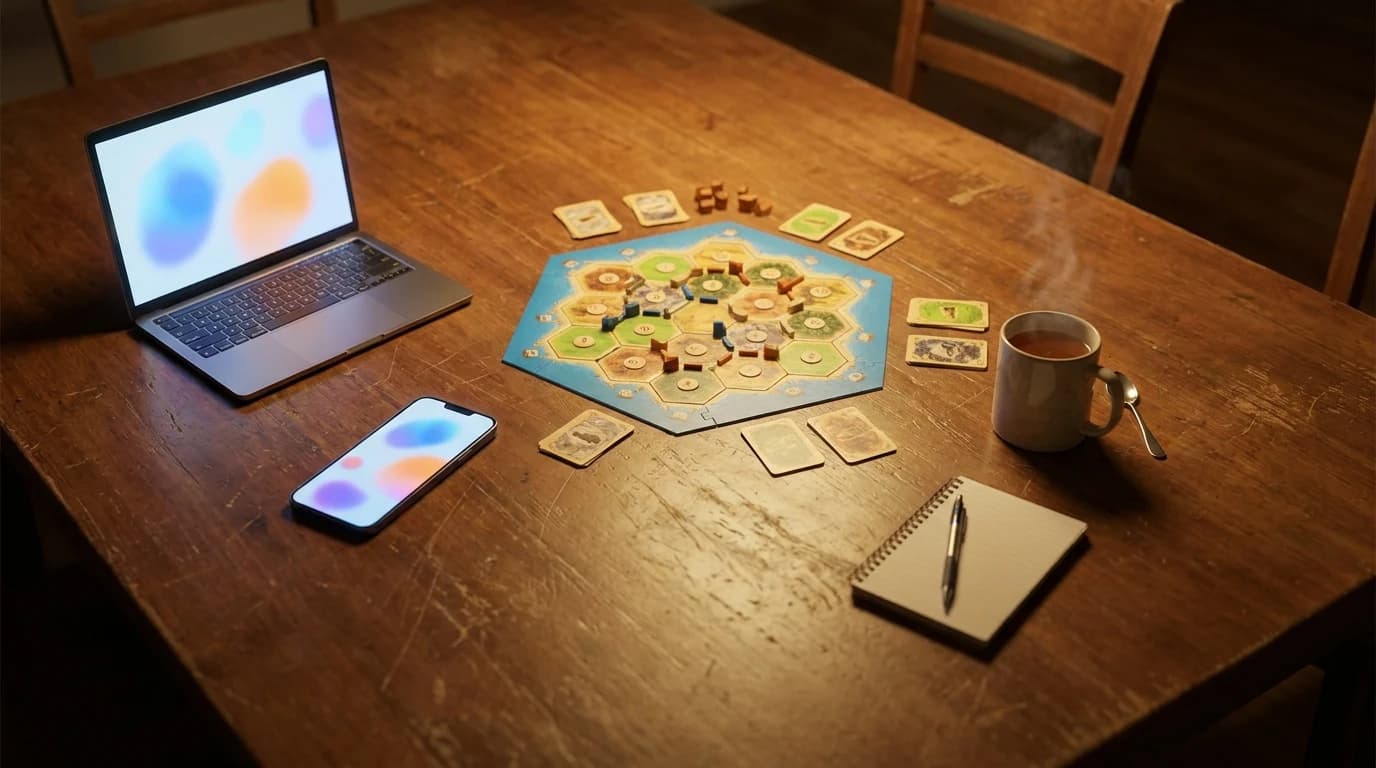
A great board game gets ruined more often by a bad explanation than by a bad design. You can buy the perfect gateway gamegateway gameA board game light enough to teach a non-gamer in 5-10 minutes but with enough decision space to engage repeat play. Ticket to Ride, Azul, and Catan are the standard recommendations., set the table, pour the snacks, and still lose the whole night to forty minutes of someone reading a rulebook aloud while four adults quietly check their phones.
The fix is not charisma. Teaching a game well is a repeatable skill, and the people who are good at it almost all do the same handful of things. Here is the method that actually keeps a night moving.
What goes wrong (and why)
Most failed teaches are one of these five, not bad luck:
| Mistake | What it looks like | The cost |
|---|---|---|
| Teaching cold | You crack the shrink wrap and learn it together | The teach balloons from 5 minutes to 40 |
| Rules before goal | You explain pieces and actions, then "oh, and you win by..." | Players can't tell which rules matter |
| Front-loading every edge case | Special cards, tie-breakers, and exceptions up front | Everyone forgets the core loop |
| One long monologue | A 20-minute lecture with no turns taken | Attention is gone by minute 6 |
| Punishing first mistakes | "Too late, you already moved" | A new player decides the game isn't for them |
Step 1: Do the prep before anyone arrives
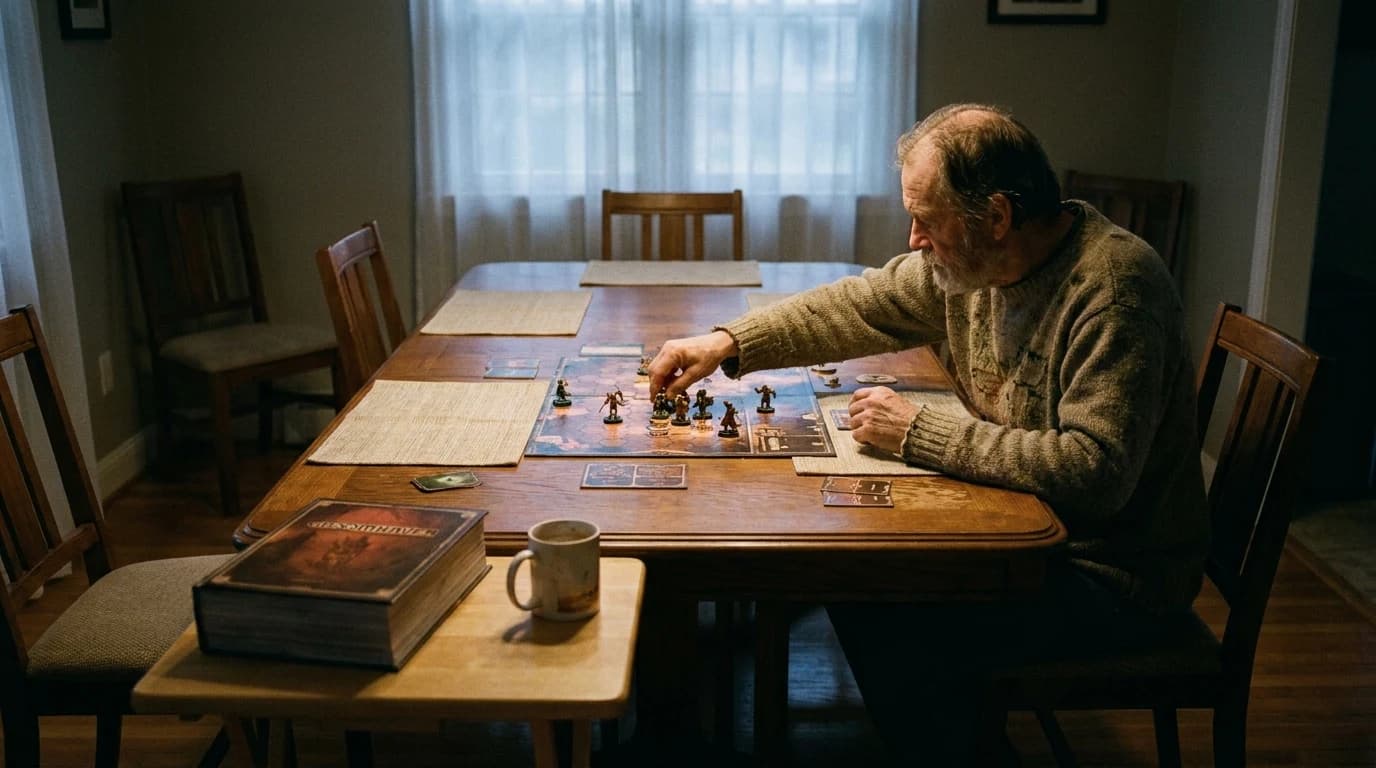
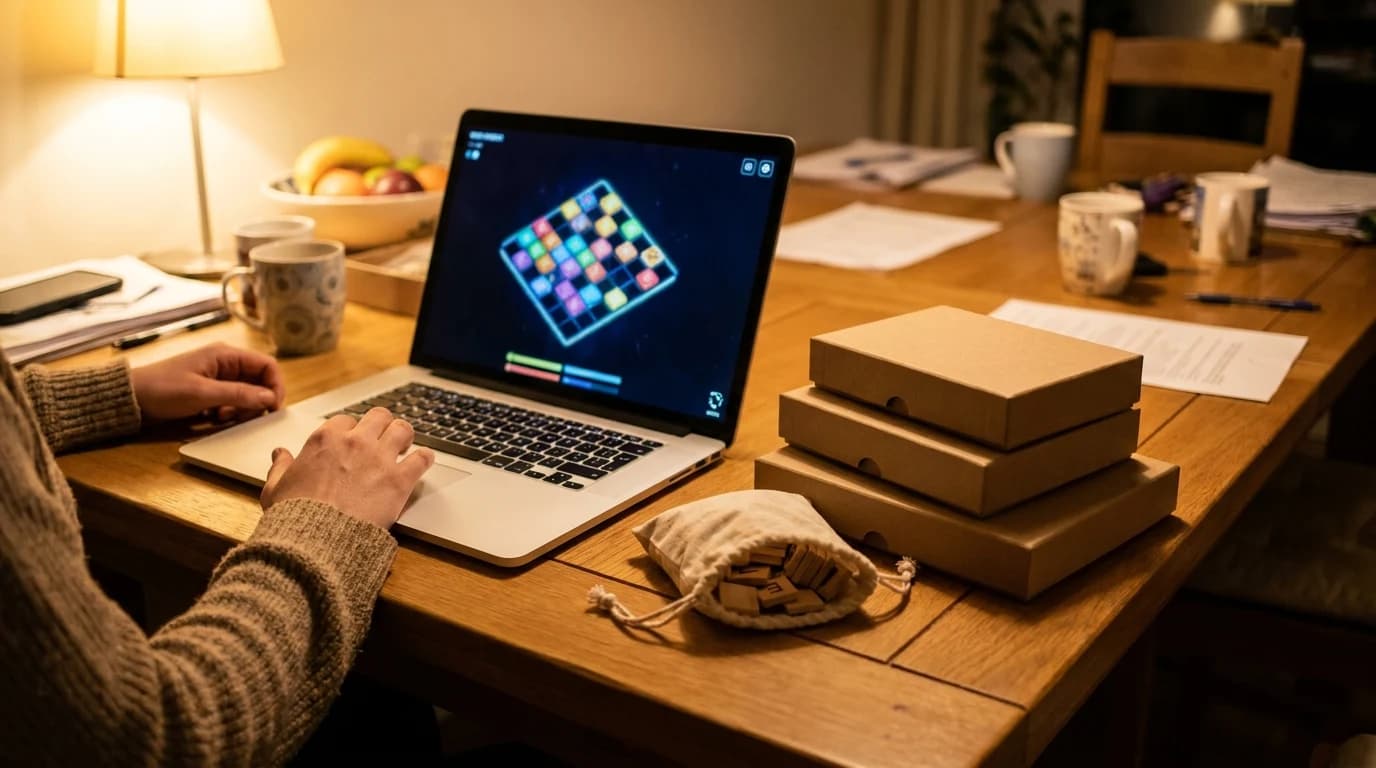
The single biggest predictor of a good teach is whether the teacher already knows the game. Shut Up & Sit Down's teaching guide is blunt about it: do not invite people over to play a game you have never opened. Watch a rules-explanation video or play a "dummy game" controlling all the seats yourself first, so the rules are in your hands, not on the page.
Prep target: you should be able to run a full turn out loud without opening the rulebook. If you can't, you're not ready to teach it yet.
You don't have to memorize every footnote. Designers themselves forget their own edge cases. Mid-game rule lookups are fine as long as you're playing most of the time, not reading most of the time.
Step 2: Teach backwards, starting with the win
MeeplemeepleWooden person-shaped game token, named for the original Carcassonne workers. Now genericized to describe any small wooden character token. Mountain calls this "backwards design," borrowed from how teachers plan a curriculum: start with the goal, then work back to the steps. The phrase to keep in your head is almost silly: the goal of the game is to win. Say how you win first, out loud, before anything else.
The same game, opened two ways
Forwards, and it doesn't work:
- "On your turn you draw cards, then you can place trains, and there are these route tickets, and..."
- Rules arrive with nothing to attach them to
- Players can't tell what's central and what's trim
Backwards, and it lands:
- "You win by having the most points."
- "You get points by claiming train routes and completing the secret route cards in your hand."
- "Here's how a turn works..."
Once the goal is fixed in someone's mind, every new rule answers a question they're already asking: why does this matter? Without it, you're handing them disconnected car parts and hoping they picture the car.
Step 3: Use the theme as scaffolding
Skip the theme and you teach "stack dice to win cards." Lean on it and you teach "you're an architect competing for building awards."
The second version makes the mechanics click for the players who learn by understanding why they're doing something. You don't have to perform — one sentence of "here's who you are and what you want" is enough to hang the rules on.
Step 4: Pace the teach in three passes
Don't deliver the rules as one block. Layer them so the core loop lands before the exceptions:
- Goal + a single turn. What you're racing toward and what one player physically does on their turn. Nothing else yet.
- The interesting decision. The one choice that makes the game a game — the trade, the draft, the bluff. This is what they'll actually be thinking about.
- Exceptions, on a need-to-know basis. Save tie-breakers, end-game scoring quirks, and rare cards for when they come up. Announcing them up front just buries the core loop.
A rough time budget keeps you honest
| Game weight | Reasonable teach time |
|---|---|
| Gateway (Azul, Ticket to Ride) | Under 5 minutes |
| Mid-weight (Wingspan, Catan) | 10–15 minutes |
| Heavy strategy | 20+ minutes — break it up, take a turn between sections |
If your gateway teach is running past ten minutes, you've front-loaded too much. Cut to the loop and let the rest surface in play.
Step 5: Play a throwaway first round
A no-stakes round beats another paragraph of rules
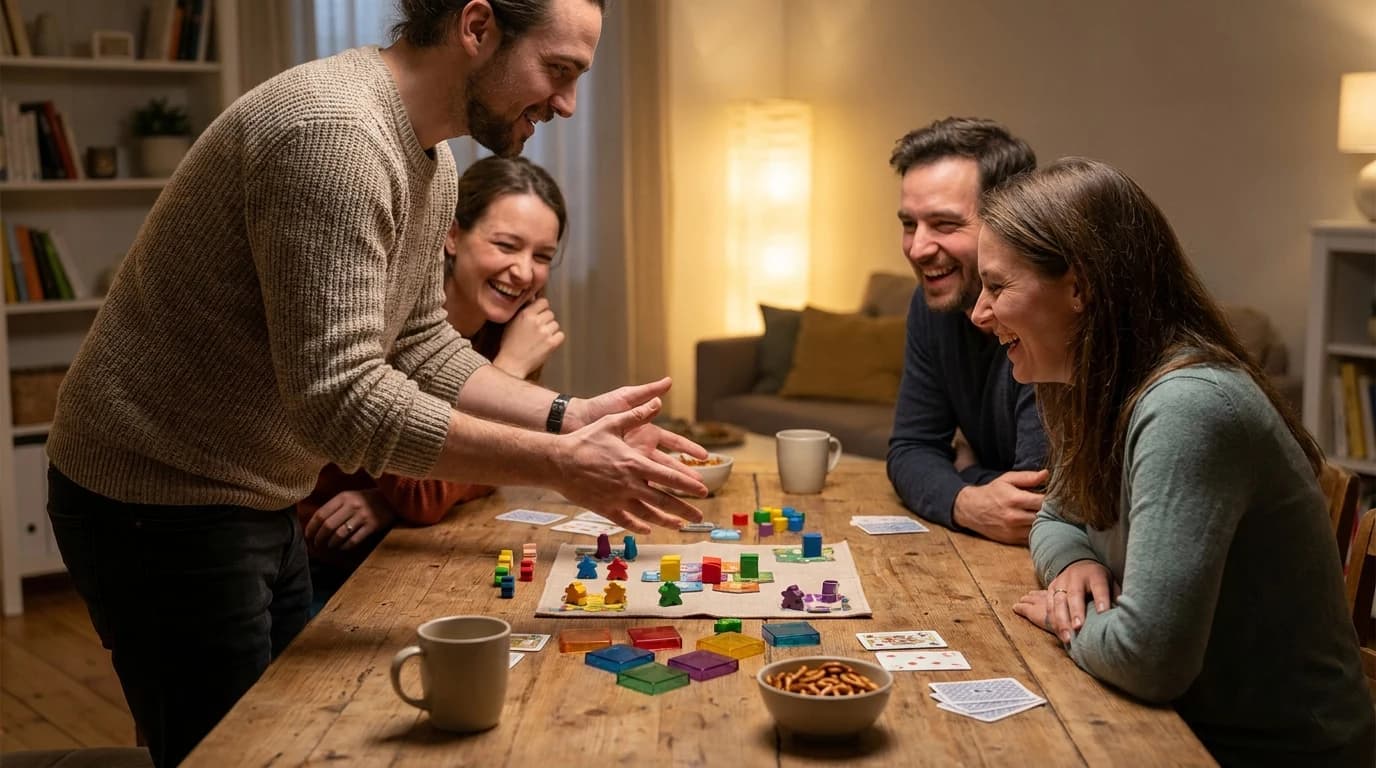
Tell the table the first round (or two) doesn't count. A practice round does two things a lecture can't: it lets nervous players make a move without fearing they've already lost, and it lets you point out a smarter line — "you could do that, but watch what happens if you..." — without looking like you're helping one person beat the others.
Most games will "click once you see it play out," and a no-stakes round is the fastest way there. Skip it only when the game can't be reset or you're tight on time.
Step 6: Let beginners take it back
When a new player makes an illegal move or forgets to collect something, the instinct is to enforce it. Resist that on a first play. If undoing the move doesn't hurt anyone else, let them fix it.
Worth knowing: a player who felt dumb for missing a token is a player who doesn't want a second game. Once people know the game you can hold the line — but the first night, fun beats a "perfect" game state every time.
What experienced gamers get wrong
Completeness is the enemy
The hobbyist instinct is that a thorough teach is a good teach — explain everything so no one is surprised later. The evidence from people who teach constantly points the other way. The best teach is deliberately incomplete: it gives the goal, one turn, and the central decision, then trusts the first round to fill in the rest.
If your explanation covers every rule before anyone has touched a piece, you haven't taught the game well — you've just read it more slowly.
Two more myths worth dropping:
- "I'll teach as we go" is not a teach. It's a 40-minute teach disguised as a 5-minute one. Front-loading the goal and the loop is faster, not slower.
- A great game can't survive a bad teach. Plenty of excellent games get shelved forever after one confusing first night. The teach, not the design, decides whether there's a game two.
The one-line version
Know the game cold, say how to win first, teach the core loop before the exceptions, run a throwaway round, and let new players fix their mistakes.
Do that and the game gets a fair shot at becoming a favorite — which is the only reason you bought it. And if you're still choosing which game to teach first, start from our gateway board games rankings — every pick there is scored partly on how fast it gets from box to table.
Sources
Your next step