Key takeaways
- The Yoto Player (3rd Gen) is the safest first pick - no subscription required, biggest content library, and the Make-Your-Own card turns the device into a family ritual.
- Toniebox 2 wins for ages 2 to 4 because the plush exterior survives toddler abuse and the figurine ritual is the whole magic; kids outgrow it around age 6 or 7.
- Hatch Rest 2nd Gen is the right choice when you already need a sound machine and nightlight - one device replaces three on the nursery shelf.
- The listening habit kids build with screen-free audio doesn't end with the figurines; it carries into adulthood as a preference for ambient music with a beginning, middle, and end.
On this page
Side-by-side comparison
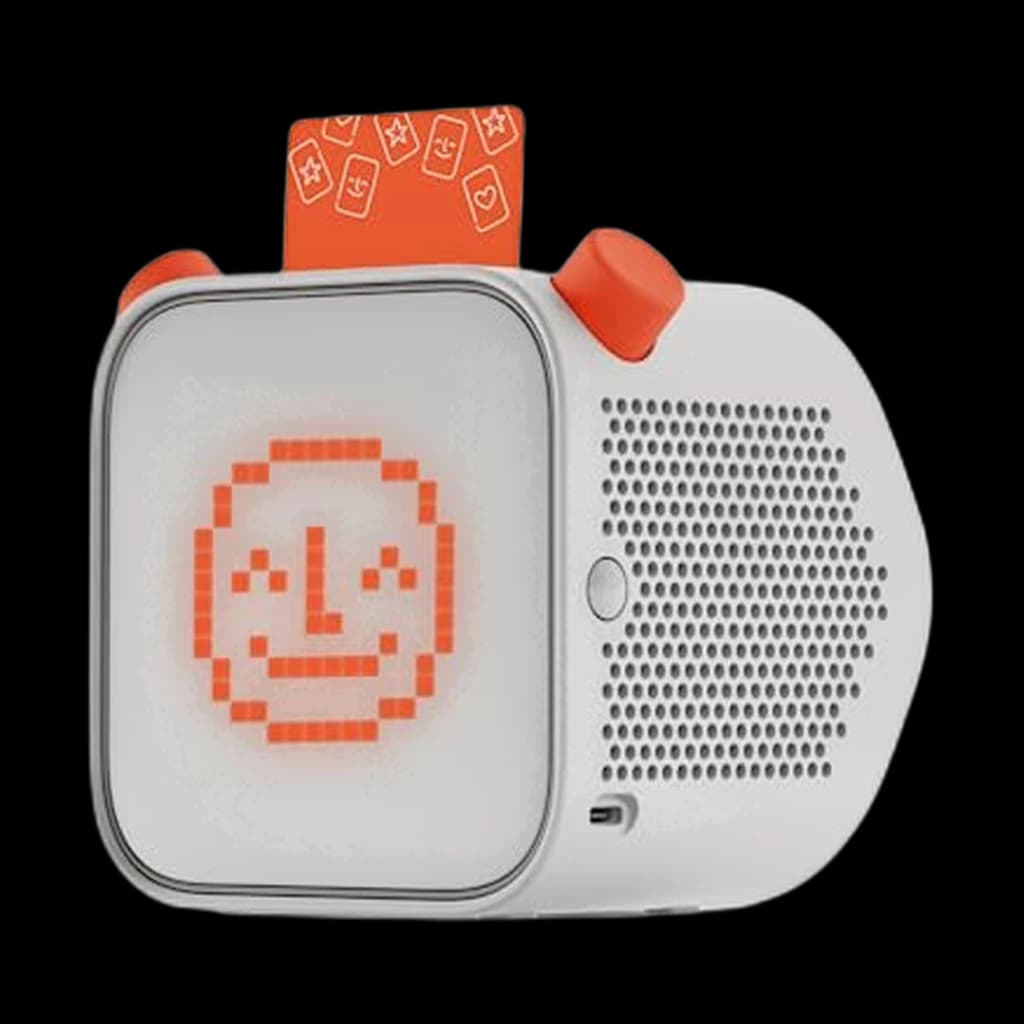
The default screen-free audio pick for ages 5 to 9. Subscription-free hardware, biggest library, family-friendly Make-Your-Own card.
- Ages
- 3+ (peaks at 4-10)
- Format
- Card-based audio player
- Library
- Yoto official cards + third-party + make-your-own
- Headphone Support
- Bluetooth
Best evidence
No subscription required for the player itself
Main trade-off
Cards add up if you buy many ($5 to $25 each)
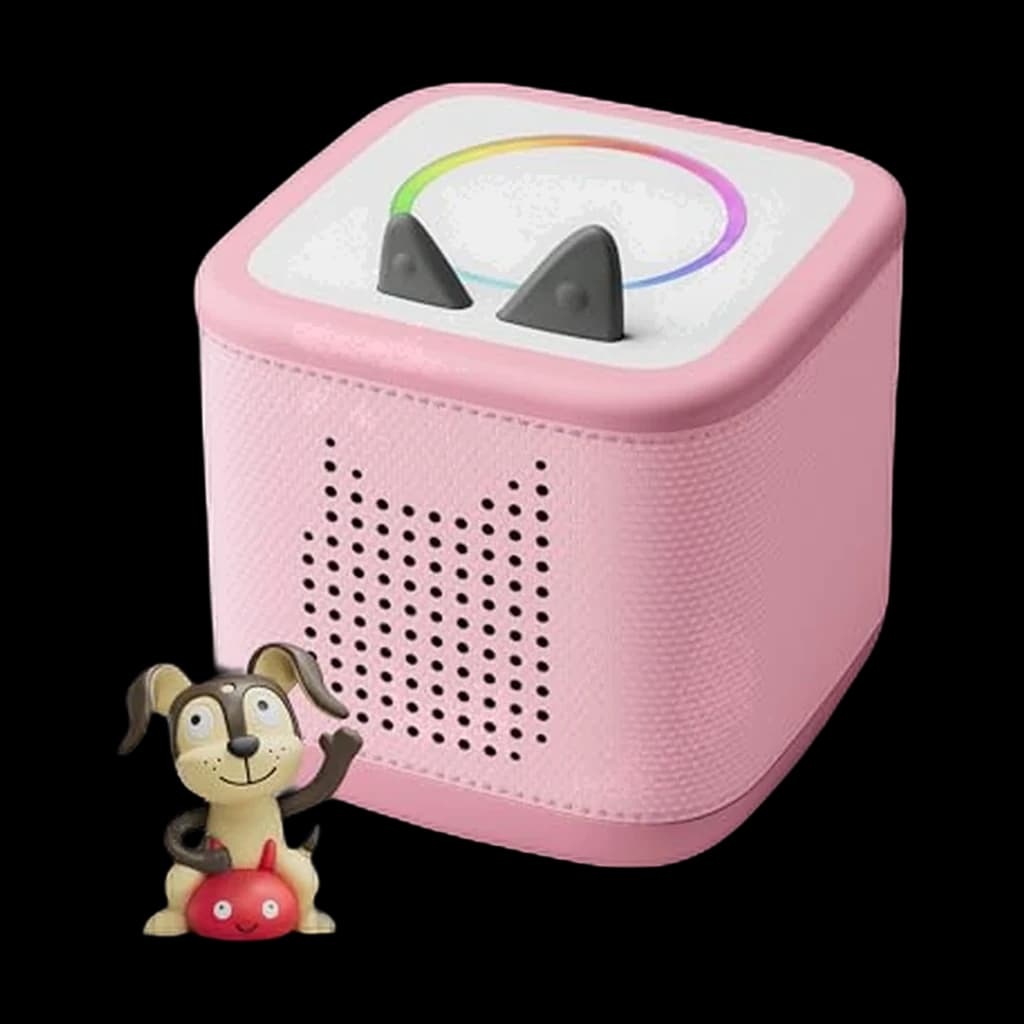
The right pick for ages 2 to 4 where the figurine ritual is the whole magic. Most kids outgrow the figurines by age 6 or 7.
- Ages
- 1+ (peaks at 2-5)
- Format
- Magnetic figurine player
- Content
- Tonies figurines (sold separately)
- Charging
- USB-C
Best evidence
Plush squishy exterior survives toddler abuse
Main trade-off
Tonies $15 to $20 each - content cost adds up
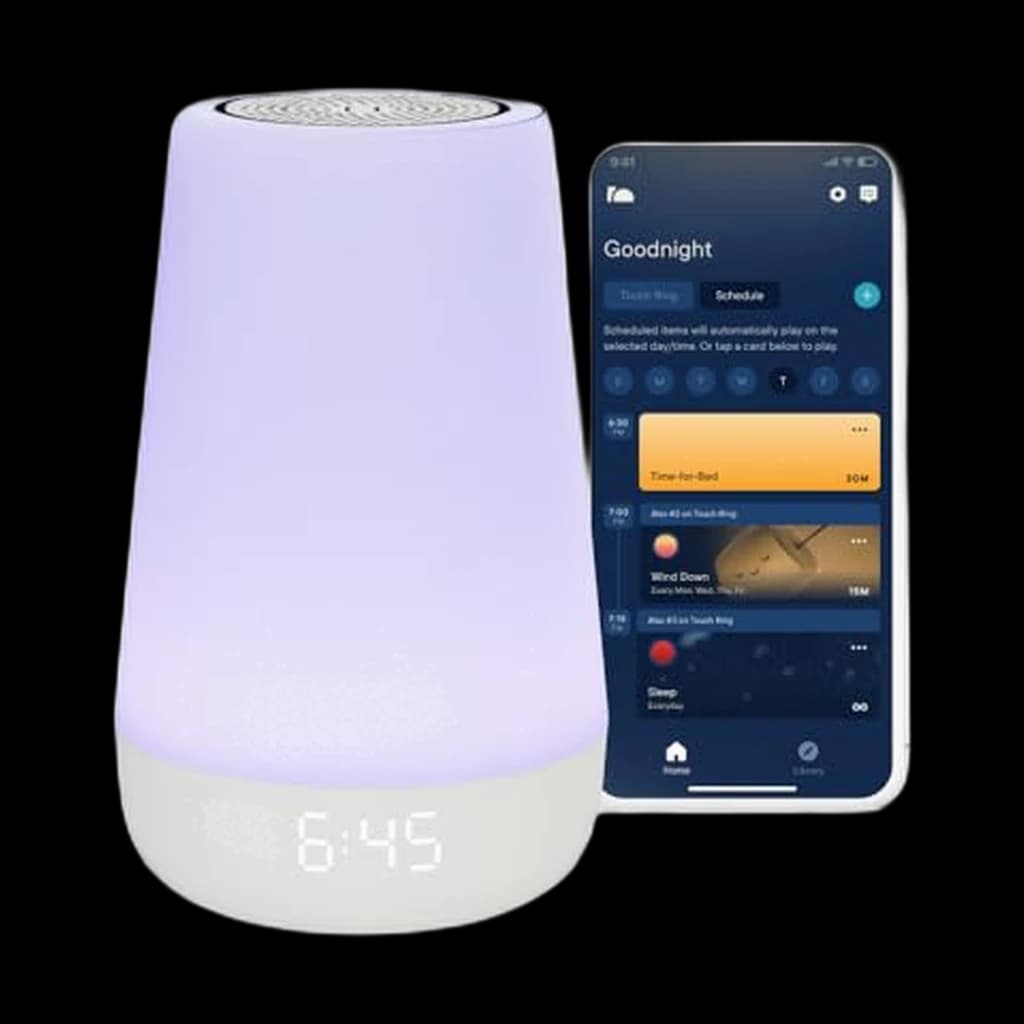
Best if you already need a sound machine and nightlight. Three nursery devices consolidated into one, with the trade-off that the curated story library lives behind a subscription.
- Ages
- 0+ (peaks at 1-7)
- Format
- Wi-Fi sleep + audio system
- Features
- White noise / nightlight / clock / stories
- Subscription
- Premium content via Hatch+ (optional)
Best evidence
Wi-Fi enabled with remote app control
Main trade-off
Hatch+ subscription unlocks most of the story content
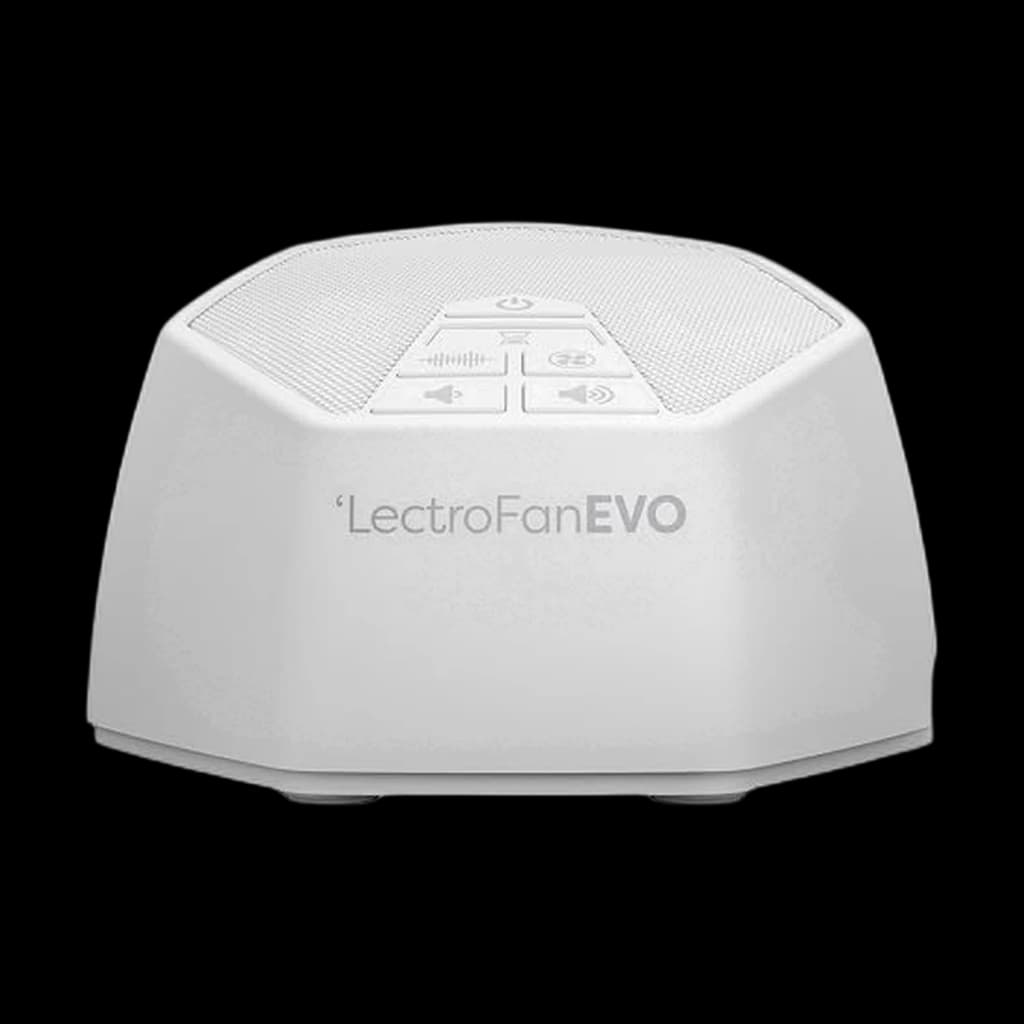
The adult white noise machine r/Sleep keeps recommending. The non-looping algorithm is the feature that justifies the price over the $25 dorm-room picks.
- Sound Source
- Digital (non-looping)
- Sound Count
- 22
- Power
- USB-powered
- Timer
- 30 / 60 / 90 min
Best evidence
22 unique non-looping sounds including 10 fan and 10 noise variants
Main trade-off
Digital speaker - purists still prefer real-fan machines
* Prices are approximate. Tap Buy to see current pricing on Amazon.
| Comparison field | #1Yoto Player (3rd Gen) + Make-Your-Own Card Owner rating | #2Toniebox 2 Audio Player Starter Set (with Playtime Puppy) Owner rating | #3Hatch Rest 2nd Gen - Baby Sleep Sound Machine + Story Player Owner rating | #4LectroFan EVO Non-Looping Sound Machine Owner rating |
|---|---|---|---|---|
|  |  |  | |
| CurioRank | ||||
| Verdict | The default screen-free audio pick for ages 5 to 9. Subscription-free hardware, biggest library, family-friendly Make-Your-Own card. | The right pick for ages 2 to 4 where the figurine ritual is the whole magic. Most kids outgrow the figurines by age 6 or 7. | Best if you already need a sound machine and nightlight. Three nursery devices consolidated into one, with the trade-off that the curated story library lives behind a subscription. | The adult white noise machine r/Sleep keeps recommending. The non-looping algorithm is the feature that justifies the price over the $25 dorm-room picks. |
| Price | ||||
| Ages | 3+ (peaks at 4-10) | 1+ (peaks at 2-5) | 0+ (peaks at 1-7) | All ages |
| Format | Card-based audio player | Magnetic figurine player | Wi-Fi sleep + audio system | Portable tabletop |
| Library | Yoto official cards + third-party + make-your-own | - | - | - |
| Headphone Support | Bluetooth | - | - | - |
| Built-in | Clock, nightlight, thermometer, white noise | - | - | - |
| Content | - | Tonies figurines (sold separately) | - | - |
| Charging | - | USB-C | - | - |
| Includes | - | Playtime Puppy starter Tonie | - | - |
| Features | - | - | White noise / nightlight / clock / stories | - |
| Subscription | - | - | Premium content via Hatch+ (optional) | - |
| Control | - | - | App + touch + voice | - |
| Sound Source | - | - | - | Digital (non-looping) |
| Sound Count | - | - | - | 22 |
| Power | - | - | - | USB-powered |
| Timer | - | - | - | 30 / 60 / 90 min |
| Buyer sentiment | Cool Value for money Ease of use Sound quality Reliability Buyers praise cool, value for money, ease of use and sound quality. Some flag reliability. Based on 108 user mentions | Learning Ease of use Battery life Sound quality Reliability Buyers praise learning, ease of use, battery life and sound quality. Some flag reliability. Based on 262 user mentions | Ease of use Quality Sleep quality Features Reliability Noise level Connectivity Buyers praise ease of use, quality, sleep quality and features. Some flag reliability and noise level. Based on 2,769 user mentions | Sound quality Quality Sleep quality Reliability Buyers praise sound quality, quality, sleep quality and reliability. Based on 3,128 user mentions |
| Pros |
|
|
|
|
| Cons |
|
|
|
|
* Prices are approximate. Click Buy to see current pricing on Amazon.
Yoto Player (3rd Gen) + Make-Your-Own Card
- No subscription required for the player
- Massive Yoto card catalog + third-party content
- Make-Your-Own card included (record bedtime stories)
Subscription-free, biggest card library across both English and translated catalogs, and the Make-Your-Own card makes it usable from age 4 through age 10.
Watch the top pick: Yoto Player (3rd Gen) + Make-Your-Own Card
Video by a third-party creator, hosted on YouTube. Loads only when you press play.
Quick Answer
If you want one screen-free audio player to put in a kid's room today, the Yoto Player (3rd Gen) is the safest pick. It runs without a subscription, the card library is huge, and the included Make-Your-Own card lets grandparents record bedtime stories.
The Toniebox 2 is the better choice for ages 2 to 4 because the plush exterior survives being thrown across the room and the Tonie figurines turn content into a tangible ritual. The Hatch Rest 2nd Gen is the right answer if you already have a baby and you want sound machine, nightlight, and bedtime stories on one device.
| Player | Best age window | Content cost | Subscription | CurioRank Score |
|---|---|---|---|---|
| Yoto Player (3rd Gen) | 5 to 9 | $5 to $25 per card | No | 84 |
| Toniebox 2 | 2 to 6 | $15 to $20 per figurine | No | 75 |
| Hatch Rest 2nd Gen | 0 to 6 (sound), 3 to 10 (stories) | Free white noise; $5/month Hatch+ | For most story content, yes | 73 |
Why This Category Exists Right Now
The category has scaled fast post-pandemic, and the timing isn't a coincidence:
- Common Sense Media's 2024 census shows kids under 8 averaging over two hours of screen media daily
- Parents tracking that number are actively looking for one-channel alternatives
- The American Academy of Pediatrics has been blunt for years — passive screen time displaces free play, story listening, and parental interaction
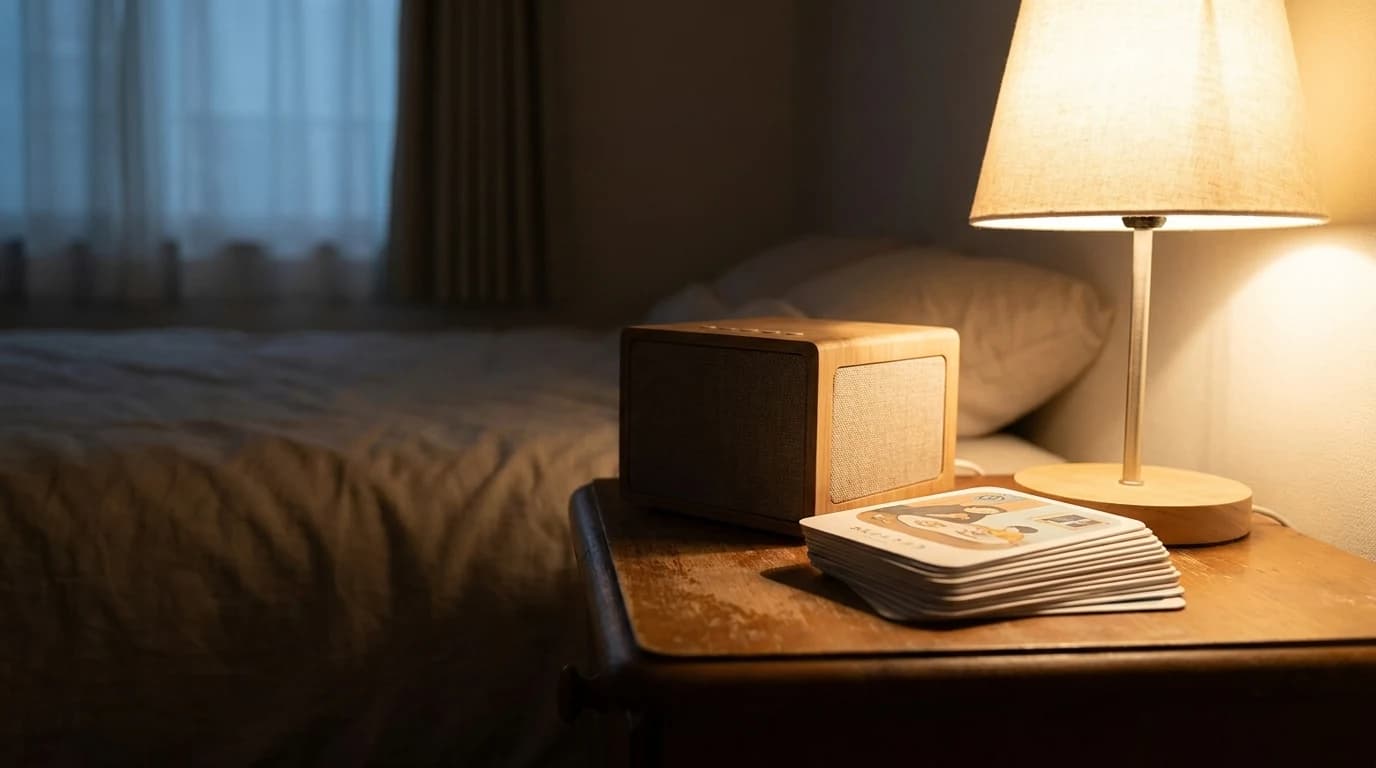
Why audio sits on the right side of the line: it occupies the ears, leaves the hands free for LEGO or drawing, and doesn't train the dopamine loop an autoplay video feed does.
Threads on r/ScreenFreeKids consistently describe parents who ditched the tablet, panicked about the entertainment hole it left, and landed on Yoto or Toniebox as the patch. Every player we have scored, including the ones that did not make the three below, sits in the screen-free audio shelf.
The 3 Players, Ranked
1. Yoto Player (3rd Gen) - best overall
Check price on Amazon · List Price:The Yoto Player is a small, rugged cube with two physical dials and a low-res pixel display. You insert a credit-card-sized Yoto card and it plays - audiobook, music album, podcast, or radio station. No subscription required for the player itself. The card library covers most of the major picture book and middle-grade catalogs: Julia Donaldson, Roald Dahl, Magic Tree House, plus original Yoto Daily and Yoto Radio that stream free.
The Make-Your-Own card is the underrated feature. You record up to an hour of audio through the app and the card plays it back. Grandparents reading bedtime stories from another time zone. A parent recording the next chapter of a story they're making up. r/Yoto consistently flags this as the moment Yoto stops being a product and becomes a family thing.
- Best age window: 5 to 9
- Content cost: $5 to $25 per card; free Yoto Daily and Radio cover hours of daily listening
- Subscription required: no
- Biggest annoyance: cards add up fast; the touch wheels take a week for kids to master
- CurioRank Score: 84
2. Toniebox 2 - best for ages 2 to 4
Check price on Amazon · $149.99 →Full review →The Toniebox 2 is fabric-covered, soft, and toddler-proof. You place a hand-painted Tonie figurine on top and the box plays its content. Take the Tonie off, the audio stops. Tilt the box left or right to skip or rewind. It's the most physical of these players, which is exactly why it works for kids too young to operate a Yoto's dials.
The trade-off is content cost and library breadth. Tonies run $15 to $20 each and the catalog skews more European than Yoto's. Parents on r/Toniebox consistently mention the same arc: the figurine ritual is the whole magic, and around age 6 or 7 the kid stops collecting figurines and the Toniebox goes into the closet.
- Best age window: 2 to 6
- Content cost: $15 to $20 per Tonie figurine
- Subscription required: no
- Biggest annoyance: limited library compared to Yoto; battery life is just okay
- CurioRank Score: 75
3. Hatch Rest 2nd Gen - best if you already need a sound machine
Check price on Amazon · $79.99 →Full review →The Hatch Rest is a sound machine, nightlight, and bedtime story player on one Wi-Fi device. If you have a baby or young toddler and you were going to buy a sound machine anyway, the Hatch consolidates three nightstand devices into one. Buyer reviews consistently call out the remote app control as the killer feature for parents who don't want to tiptoe into a sleeping nursery.
The annoyance is the Hatch+ subscription. Most of the story and meditation content lives behind a $5/month paywall. The hardware works fine without it, but the marketing implies content access that the box alone doesn't deliver.
- Best age window: 0 to 6 (sound machine) plus 3 to 10 (stories)
- Content cost: free white noise; $5/month Hatch+ for the full story library
- Subscription required: for most curated story content, yes
- Biggest annoyance: the subscription gate; Wi-Fi setup is mandatory
- CurioRank Score: 73
What Happens When the Kid Outgrows the Figurine Ritual
The interesting thing about the screen-free audio category is what happens around age 7 or 8. The Tonie figurines go in a drawer. The Yoto might still get used for audiobooks at bedtime, but the ritual of card-swapping fades.
What doesn't fade is the habit. Kids who grew up with audio as a focused activity, not background noise, keep that listening style into the rest of their lives.
This is also the point where the parent's own listening habits start to look different. Spotify autoplay and Lofi Girl on loop are fine for the gym, but they're not the same thing as a Yoto card. There's no beginning, middle, or end. There's no thing you're listening TO. It's just sonic wallpaper.
SlowHum publishes 30-minute monographs on world instruments - shakuhachi, duduk, kora, mbira, sitar, morin khuur. Each one is researched, composed, and mastered as a single listen rather than an infinite-loop background sleep file. The shakuhachi piece walks through the bamboo flute's role in Japanese Zen practice. The duduk piece sits inside the Armenian apricot-wood double reed tradition. The kora piece is West African 21-string harp-lute in long form. If you've been raising a kid on Yoto and miss having something to listen TO rather than just have on in the background, SlowHum is closer to that pattern than any Spotify playlist.
The Sleep-Tech Bridge: Same Hardware, Different Content
The adult overlap with kids' audio sits in the sleep-tech category. The Hatch Restore 2 is functionally the adult Hatch Rest: sunrise alarm, wind-down audio, white noise library, subscription gate. The LectroFan EVO is the white noise machine adults actually buy on a r/Sleep recommendation; it runs 22 non-looping sounds and most buyers point to it as the device that finally got their partner to stop complaining about ceiling fan noise. The Magicteam 20 is the dorm-room and travel pick with 68,000+ buyer reviews and 32 volume notches.
White noise and ambient music do different jobs
White noise (LectroFan, Magicteam, Yogasleep Dohm) is for masking:
- A snoring partner
- Hallway traffic
- The upstairs neighbor
Ambient melodic music (a SlowHum 30-minute monograph, a Brian Eno album, a Hatch+ story track) is for following:
- Something for the mind to track without demanding attention
- A piece with a beginning, middle, and end
- The wind-down hour before sleep rather than the moment of sleep
Most adult sleepers benefit from both at different moments: white noise to fall asleep, melodic ambient for the wind-down hour before.