Key takeaways
- A controlled University of Toledo study (36 toddlers, 2018) found children played about twice as long, and in more creative ways, with 4 toys than with 16. Abundance fragments attention; scarcity deepens play.
- The best-scoring toys in long-running play research are the plainest open-ended ones - blocks, simple vehicles, construction sets - because they can be used many ways and prompt problem solving and pretend play.
- The American Academy of Pediatrics warns against trusting the word 'educational' on a label and against toys that substitute for human interaction. The skills that matter most come from unstructured, social play.
- If a child already owns a lot, rotating toys (box up most, swap every couple weeks) is a free, higher-return move than buying more.
On this page
Quick Answer
If you want a child to play better, the most reliable lever is not buying a smarter, flashier, or more "educational" toy — it is putting fewer toys in front of them at once. A landmark University of Toledo study found that toddlers given four toys played roughly twice as long, and in noticeably more creative ways, than the same children given sixteen.
The practical version for a gift-giver: choose one or two genuinely open-ended things, not a bundle of single-use gadgets. If a child already owns a mountain of toys, rotating them is more valuable than adding to the pile.
What the research actually shows
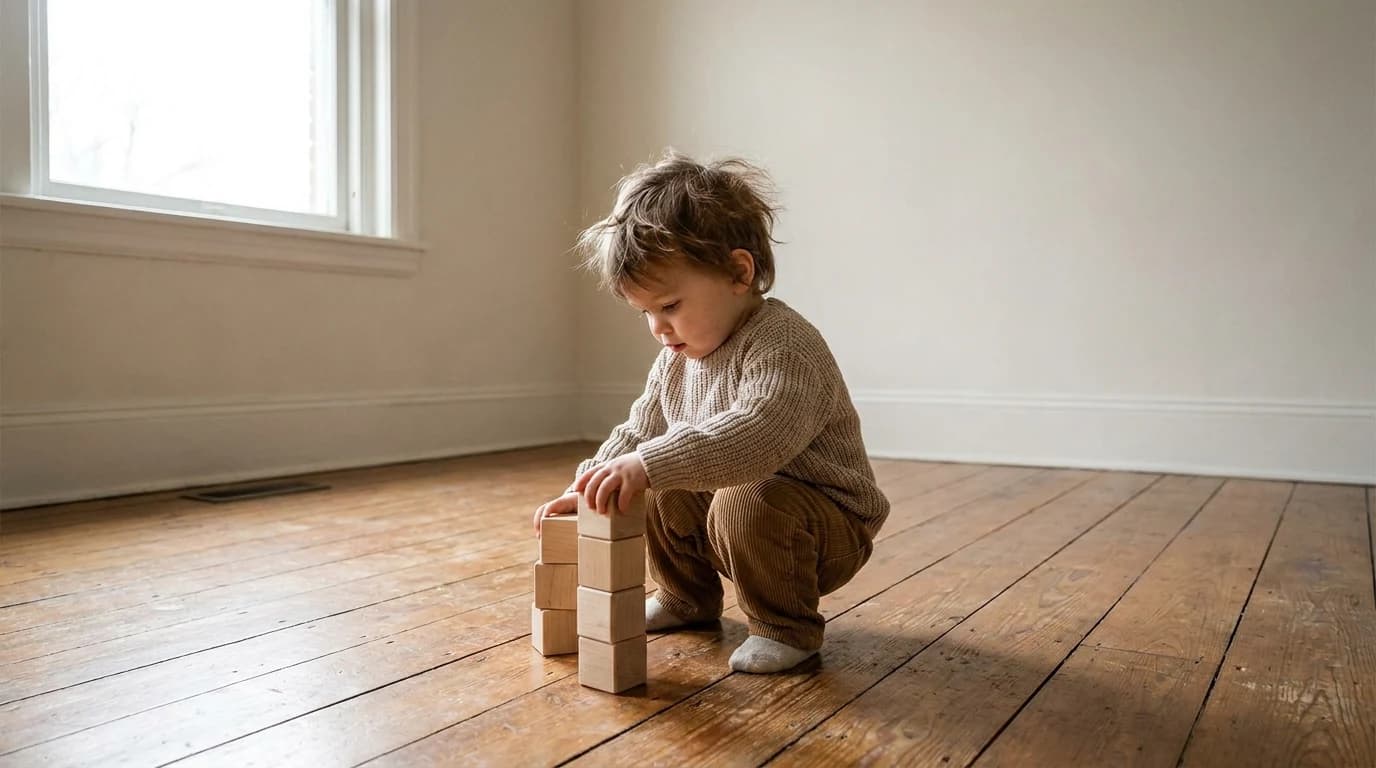
In 2018, occupational-therapy researchers at the University of Toledo published a controlled study in Infant Behavior and Development. They brought 36 toddlers (18 to 30 months old) into a playroom twice: once with just 4 toys available, once with 16.
The result was lopsided
- With 4 toys — children played with each one about twice as long and in more sophisticated ways, moving past simple stacking or tipping into pretend uses like feeding, hammering, or hiding.
- With 16 toys — many children touched ten or more in the first fifteen minutes, flitting from object to object without ever exploring what any single toy could do.
"When there were fewer toys, they played with them in more ways." The abundance of options didn't enrich play — it fragmented attention. The researchers' bottom line for parents: you don't need to introduce a pile of new toys all at once. Save some, and swap them in later.
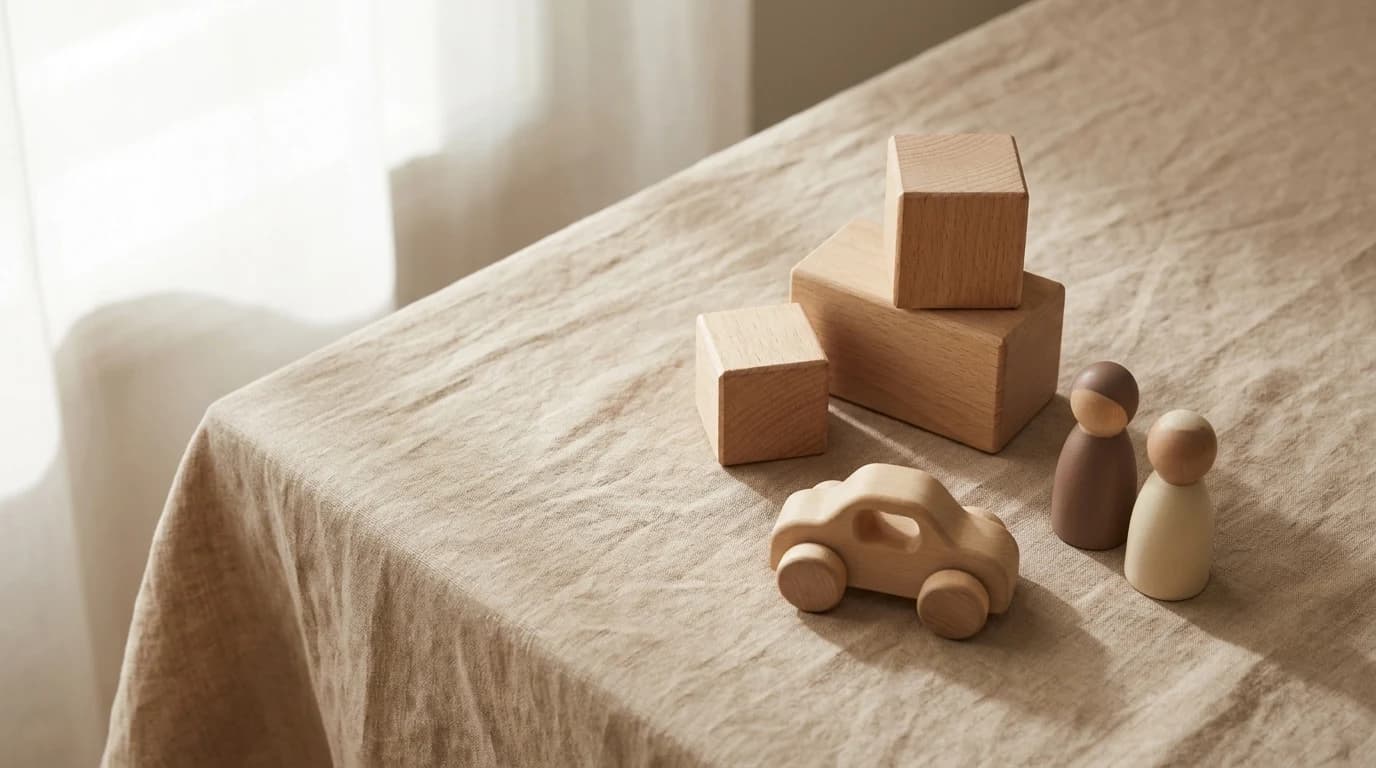
This lines up with separate, longer-running work from the TIMPANI toy study at Eastern Connecticut State University, where researcher Jeffrey Trawick-Smith has spent years scoring how children actually play with specific toys. His summary is blunt: "Basic is better." The highest-scoring toys in his lab were the plainest ones — hardwood blocks, simple wooden vehicles, classic construction sets — because they are open-ended enough to be used a dozen different ways and they prompt problem solving, social interaction, and creative expression.
What most people get wrong
The failure mode isn't cheap toys — it's toys that imagine for the child
The common assumption is that a more advanced toy produces more advanced play — that a talking, lighting-up, "STEM-certified" toy teaches more than a bin of blocks. The research points the other way.
The American Academy of Pediatrics, in its clinical report on selecting toys, warns parents to be skeptical of the word "educational" on a label. Most toys and apps marketed that way target narrow memory skills (letters, shapes), which are only a sliver of what helps a child later. The capacities that matter most — impulse control, managing emotions, flexible creative thinking — are built through unstructured, social play, not through a toy that performs the play for the child.
The AAP also cautions that toys built to substitute for human interaction (a bear that reads the story so you don't have to) tend to crowd out the back-and-forth that actually drives development. A toy with one correct way to be used gets exhausted in a few minutes. A toy with no fixed script gets reinvented every afternoon.
| Open-ended (deep) | Single-use (shallow) | |
|---|---|---|
| Ways to play | Many — child invents new uses | One or two — fixed by the toy |
| What it builds | Problem solving, pretend play, negotiation | Recognition of one preset routine |
| Replay value | High; comes back out for years | Low; novelty fades fast |
| Examples | Blocks, figures, construction sets, art supplies, classic board/card games | Toys that light up, talk, or run a single scripted demo |
How to choose well (a short framework)
Three questions, not fifty features
You don't need a checklist of fifty features.
- Can it be played with more than one way? If you can only picture one thing the child will do with it, it's a single-use toy. Open-ended beats clever almost every time.
- Does it require the child, not the toy, to do the work? The best toys are slightly under-powered — they leave room for the child to supply the story, the rules, or the structure.
- Will it still be interesting in six months? Novelty is the enemy of depth. A toy that's fascinating because it's new will be ignored once it's not.
For an older kid or an adult hobbyist, the same logic holds, just scaled up: a construction set, a strategy game with real decision space, or a craft kit with no single "right" outcome will out-earn its shelf space far longer than a one-trick gadget. That's the whole premise behind ranking toys and games on replay depth rather than feature count.
The "fewer is more" move for a crowded toy room
What to do when the child is bored and already owns dozens
What actually works, and costs nothing:
- Box up two-thirds of what's out
- Leave a small, varied selection accessible
- Rotate the boxes every couple of weeks
What most people do instead:
- Buy something new to break the boredom
- Add another single-use gadget to a full shelf
- Assume the child has outgrown toys they've simply stopped seeing
To the child, the rotated-in toys feel new again — and with fewer options in view, they go deeper on what's in front of them. It is the single highest-return play intervention that costs nothing, and it follows directly from the Toledo finding.
The headline isn't anti-toy. It's anti-clutter. One or two well-chosen, open-ended things — given room to breathe — beat a sprawling collection every time.
Your next step
Fewer, better toys? Start with the ones that keep earning their shelf space.
Common questions
Does buying fewer toys actually make kids play better, or is that just a parenting trend?
What makes a toy 'open-ended'?
Are 'educational' toys worth it?
My kid has tons of toys but seems bored. What should I do?
Research Sources
- University of Toledo - Fewer toys lead to richer play experiences (Dauch & Metz study summary)
- Dauch et al. 2018, Infant Behavior & Development - The influence of the number of toys in the environment on toddlers' play (PubMed)
- NAEYC - What the Research Says: Impact of Specific Toys on Play (Trawick-Smith, 'Basic is better')
- AAP / HealthyChildren.org - Toy Buying Tips (AAP report on selecting toys; caution on 'educational' labels)