Key takeaways
- At-home escape kits split into two families. EXIT boxes are written on, folded and torn during play and are designed to be played once; Unlock!, Deckscape and Cluebox survive intact and can be lent on or resold.
- Cost per hour of first play swings about 6x across the five boxes here, from roughly $8 an hour for an EXIT box to roughly $50 an hour for a hand-built Cluebox.
- Cheapest way in: EXIT: The Abandoned Cabin, listed by Thames & Kosmos at 1-4 players and one to two hours. Best value if the box has to survive: Unlock! Escape Adventures, three hour-long adventures in one deck.
- Cluebox: Schrodinger's Cat is the only pick with published reset instructions, so a single box can travel round a family indefinitely - it simply costs the most per hour up front.
On this page
Side-by-side comparison
The cheapest hour of escape-room puzzling here, and the box to buy before you know whether your group likes the format.
Three hour-long adventures in one intact box, so the cost per hour drops and the game still passes on to the next household.
The follow-up box for a group that already finished one EXIT and wants the same format with more teeth.
A numbered card deck, paper and a pencil - the lightest setup on the list, and it re-sorts for the next group.
A hand-built wooden puzzle box that resets for the next player - the priciest hour here and the only one you can hand round indefinitely.
* Prices are approximate. Tap Buy to see current pricing on Amazon.
#1EXIT: The Abandoned Cabin 4.5 | #2Unlock! Escape Adventures 4.7 | #3EXIT: The Forbidden Castle 4.5 | #4Deckscape: Test Time 3.9 | #5Cluebox: Schrodinger's Cat 4.6 | |
|---|---|---|---|---|---|
 |  |  |  |  | |
| CurioRank | |||||
| Verdict | The cheapest hour of escape-room puzzling here, and the box to buy before you know whether your group likes the format. | Three hour-long adventures in one intact box, so the cost per hour drops and the game still passes on to the next household. | The follow-up box for a group that already finished one EXIT and wants the same format with more teeth. | A numbered card deck, paper and a pencil - the lightest setup on the list, and it re-sorts for the next group. | A hand-built wooden puzzle box that resets for the next player - the priciest hour here and the only one you can hand round indefinitely. |
| Price | |||||
| Survives play | No - write, fold, tear | Yes - cards stay intact | No - write, fold, tear | Yes - cards stay intact | Yes - published reset instructions |
| Players | 1-4 | 1-6 | 1-4 | 1-6 | 1-2 |
| Stated play time | 1-2 hours | 3 adventures, about 1 hour each | 1-2 hours | 30-90 minutes | 45-60 minutes |
| Age | 12+ | 10+ | 12+ | 12+ | 14+ |
| App needed | No | Yes - free companion app | No | No | No |
| Buyer sentiment | Gameplay Difficulty Value for money Game quality Clues Buyers praise gameplay, difficulty, value for money and game quality. Some flag clues. Based on 428 user mentions | - | Gameplay Difficulty Buyers praise gameplay. Some flag difficulty. Based on 99 user mentions | - | Fun Quality Difficulty Gift Buyers praise fun, quality, difficulty and gift. Based on 1,222 user mentions |
| Pros |
|
|
|
|
|
| Cons |
|
|
|
|
|
* Prices are approximate. Click Buy to see current pricing on Amazon.
Two families, not one shelf
Every roundup ranks at-home escape kits as though they were one product class. They are not, and the difference decides what you should be willing to pay.
Escape-room boxes split into two families - the ones you destroy and the ones you pass on - and across the five boxes here, the cost per hour of first play swings about 6x.
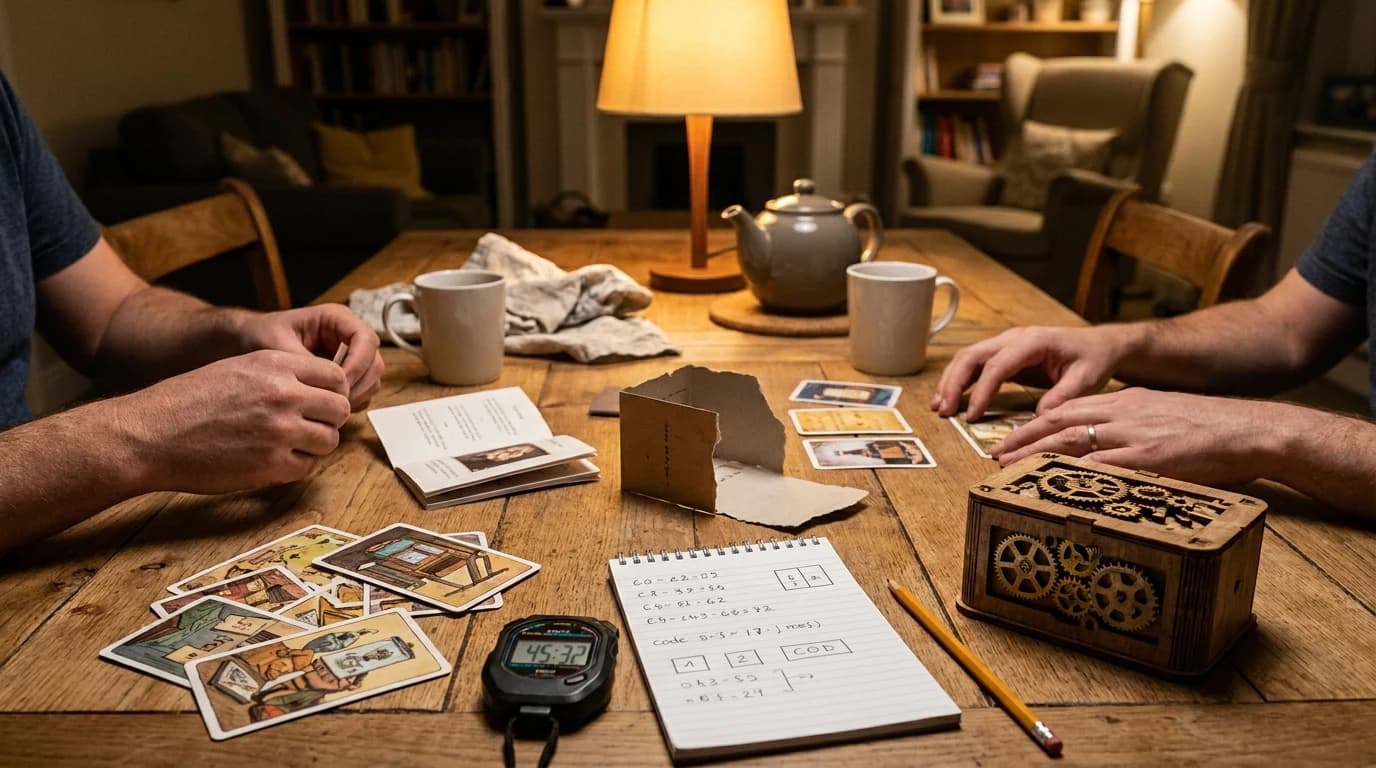
The destroy family says so in its own rulebook. Thames & Kosmos' manual for the Abandoned Cabin tells players they can write on, fold, or tear the materials and that the game can only be played once. That is the design working, not a defect: a riddle that needs a card folded in half can do things a pristine deck cannot.
The pass-on family leaves everything intact. Finish it and the box is still a box - a friend plays it next, or it sells on. Unlock! and Deckscape run on cards you set aside rather than mark, and a Cluebox is built to be reassembled for the next player.
Neither family is better. They answer different questions, and almost every roundup you will read scores them on the same scale anyway.
What the destroy-it format actually buys you:
- Physical puzzles: folding, tearing and overlaying components to reveal an answer
- The lowest entry price on the shelf
- No app, no account, no batteries
- A gift nobody has to give back
What usually disappoints:
- Resale value is zero the moment you finish
- One group, one night - a second group needs a second copy
- Nothing survives to display or re-gift
- A confident group can beat the stated time by half and feel short-changed
The math nobody runs
Cost per hour of first play is the current listed price divided by the stated play time, taken from each publisher except Deckscape, where the range comes from BoardGameGeekBoardGameGeekThe definitive board game database and community. Scores, rankings, weight ratings, and forum discussion drive most enthusiast purchase decisions. The BGG Top 100 is the closest thing to a canon in the hobby.. It is the only figure that makes a torn-up card kit and a wooden lock box comparable.
| Game | Survives the night? | Players | Stated play time | Cost per hour, first play |
|---|---|---|---|---|
| EXIT: The Abandoned Cabin | No - write, fold, tear | 1-4 | 1-2 hours | about $6-12 |
| EXIT: The Forbidden Castle | No - write, fold, tear | 1-4 | 1-2 hours | about $7-14 |
| Unlock! Escape Adventures | Yes - cards stay intact | 1-6 | 3 adventures, about 1 hour each | about $10 |
| Deckscape: Test Time | Yes - cards stay intact | 1-6 | 30-90 minutes | about $12-35 |
| Cluebox: Schrodinger's Cat | Yes - resets for the next player | 1-2 | 45-60 minutes | about $45-60 |
The column that actually decides a purchase is the second one. An EXIT box is the cheapest hour on the page and is finished with once you are. A Cluebox is the most expensive hour on the page and the only pick the manufacturer publishes reset instructions for, so one purchase can serve several groups in turn.
Game-night cue: If the box gets destroyed, judge it on price per hour. If it survives, judge it on price per group - the second group costs you nothing.
Which box fits your table
1. EXIT: The Abandoned Cabin
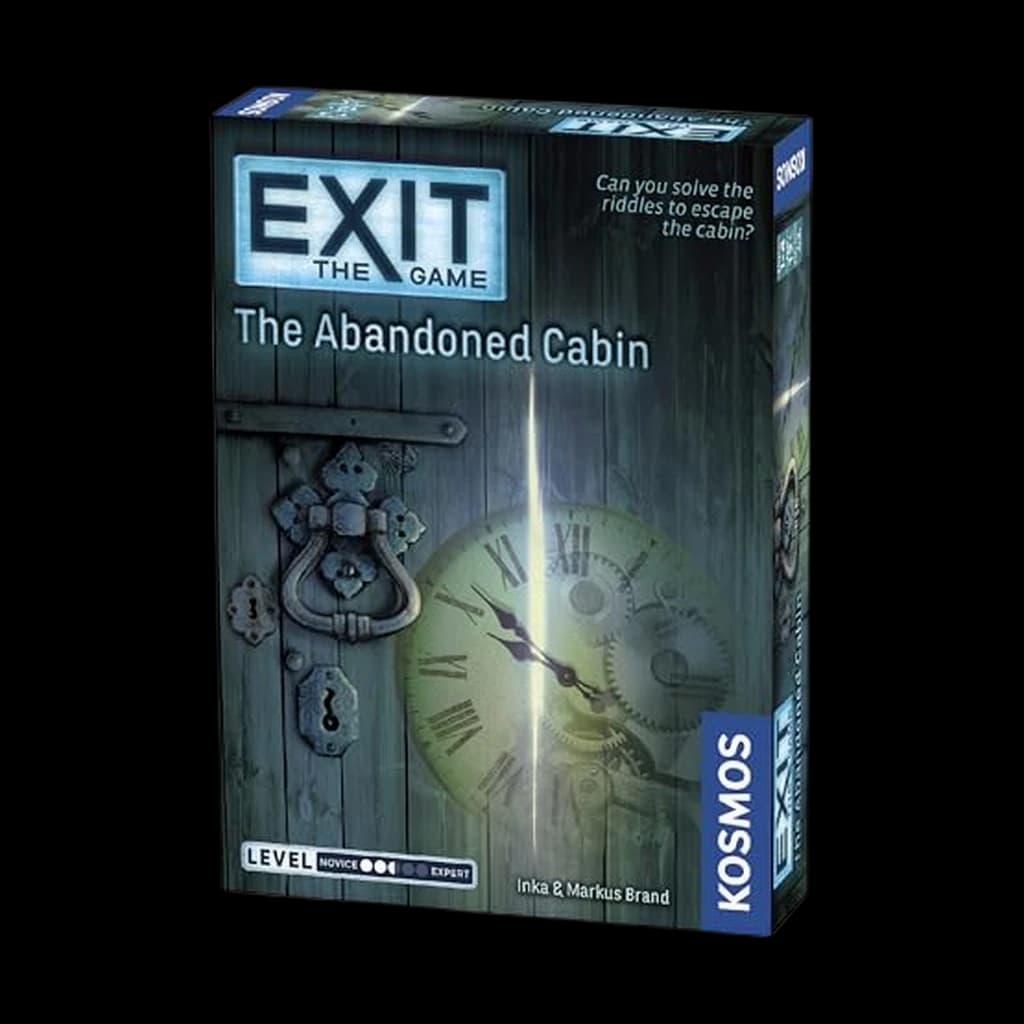
Check price on Amazon →Full review →The series entry point and the cheapest hour on this page. Thames & Kosmos lists it as 1 to 4 players, ages 12 and up, one to two hours. Buy this one to find out whether your group enjoys the format at all before spending more. It is also the least painful box to tear up, being the cheapest of the five.
2. Unlock! Escape Adventures
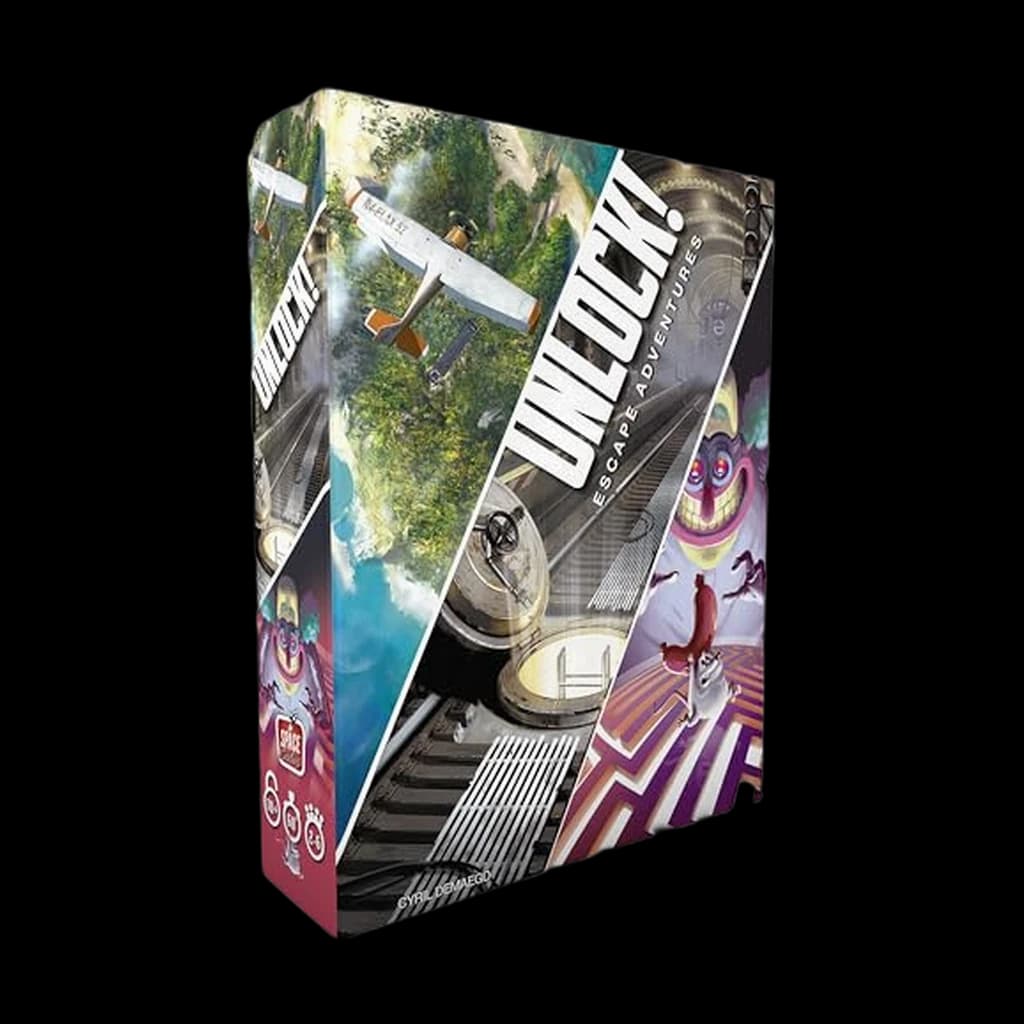
See buying optionsFull review →Space Cowboys builds it as three standalone scenarios of about an hour each, for 1 to 6 players aged 10 and up, run by a free companion app that handles the timer, hints and penalties. Nothing is marked or torn, so it moves on intact.
3. EXIT: The Forbidden Castle
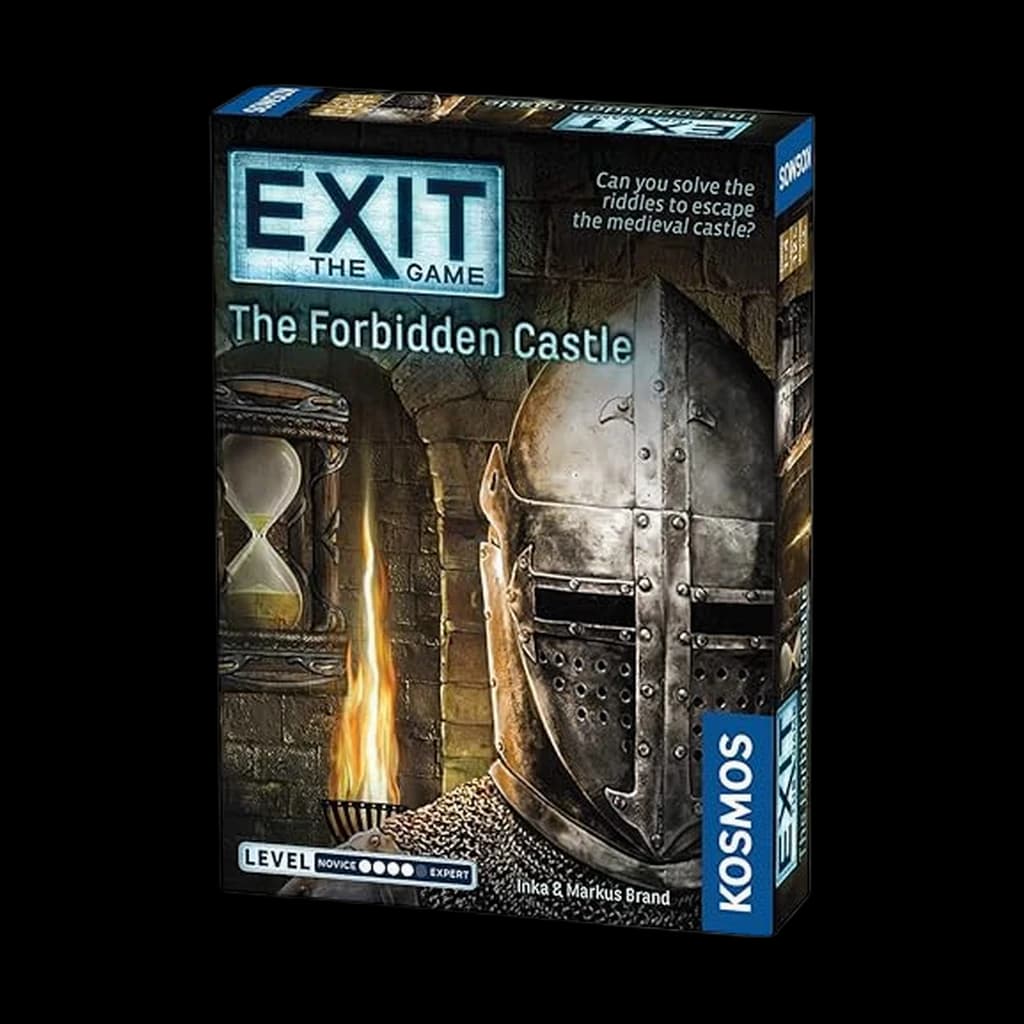
Check price on Amazon →Full review →Same format, aimed at a table that has already escaped one cabin. Also 1 to 4 players and one to two hours per the publisher. Buy it second rather than first; the step up in difficulty is the whole point of it, and a group that has never done one of these will spend the first half hour learning the grammar of the puzzles rather than solving them.
4. Deckscape: Test Time
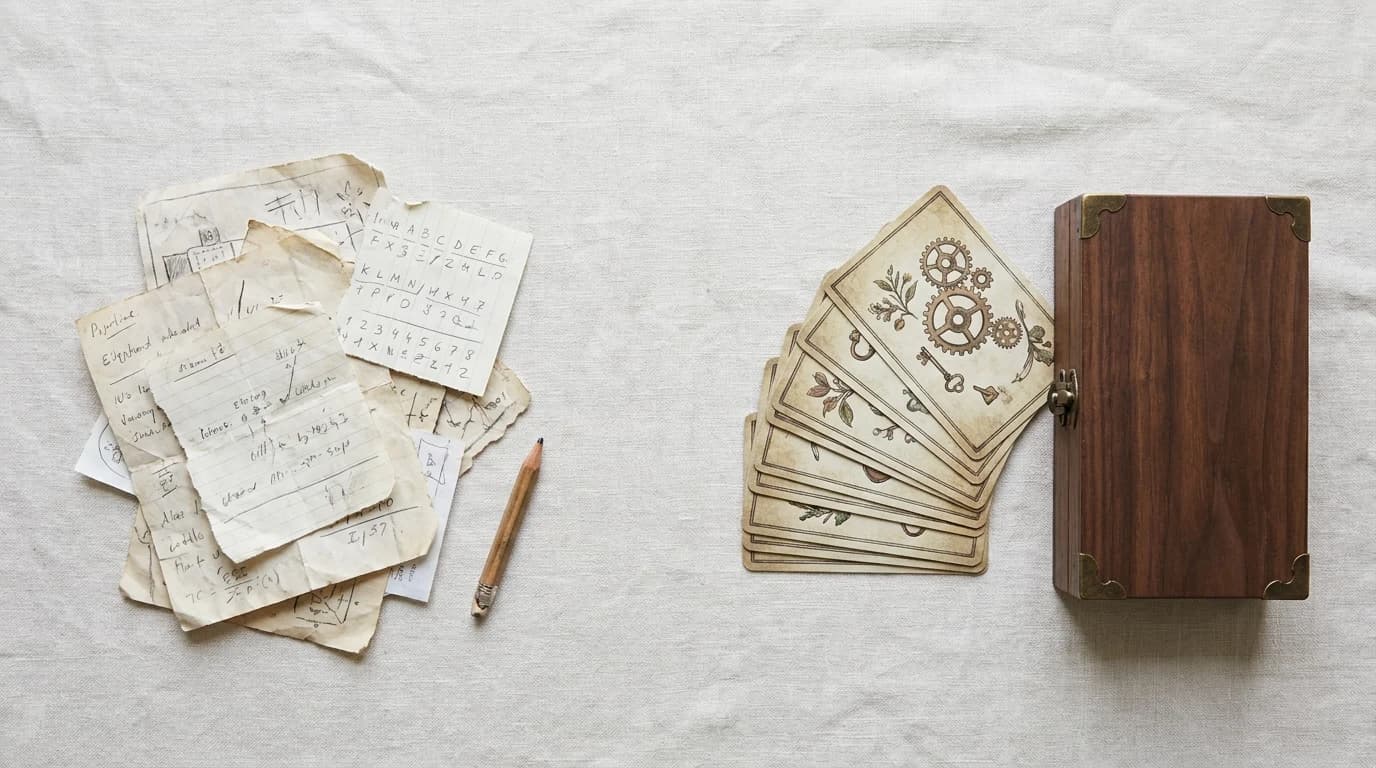
Check price on Amazon →Full review →The lightest lift here: a numbered deck, a sheet of paper and a pencil. dV Giochi's own rules never ask you to mark or destroy a card, so a re-sorted deck plays again for someone else. It is the one that travels: no board, no app, no table required beyond somewhere to put a deck down. Right for an hour, not a whole evening.
5. Cluebox: Schrodinger's Cat
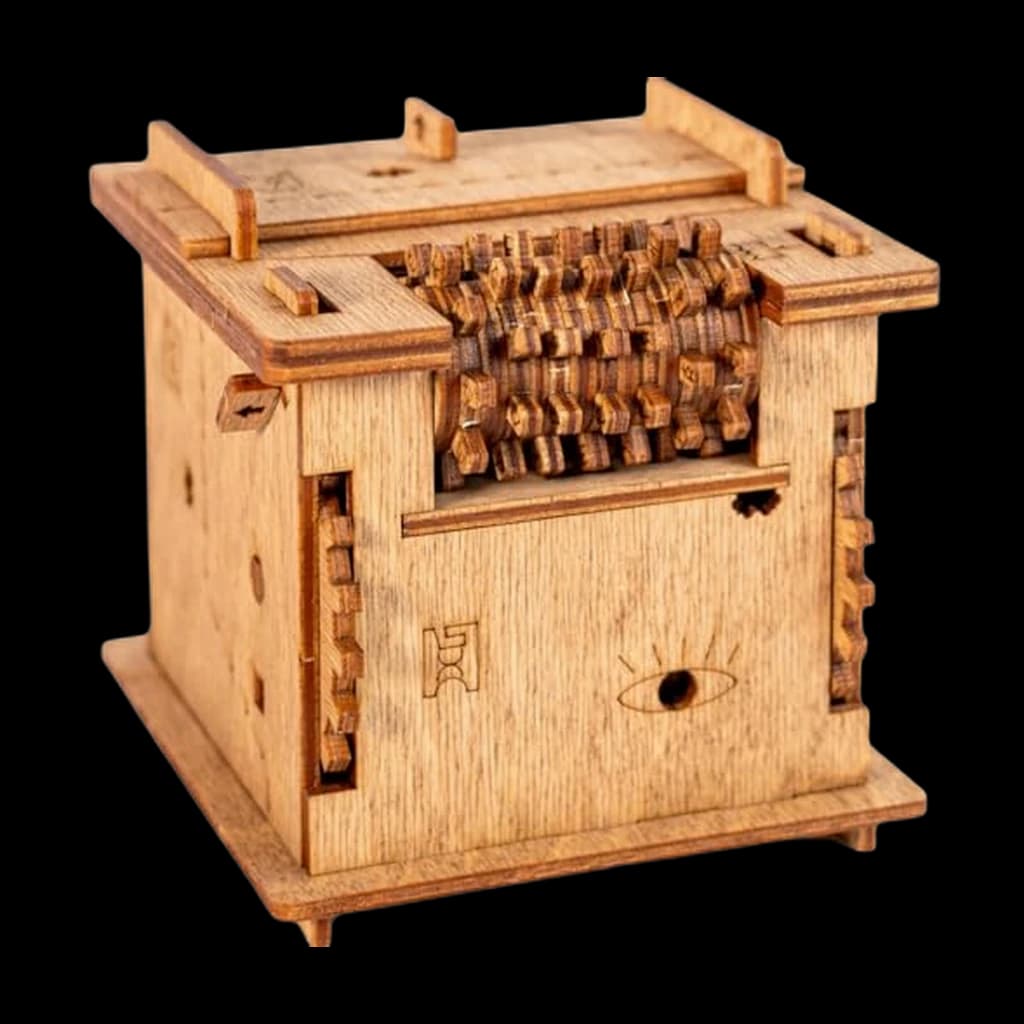
Check price on Amazon →Full review →Not paper at all - a hand-built wooden box of mechanical locks that iDventure sells as 45 to 60 minutes of gameplay. It costs the most per hour of anything here and is the only pick with published reset instructions, which is what makes it re-giftable. If mechanical puzzles are the real draw, our brain teasers and mechanical puzzles guide goes deeper.
Before you click buy
- Count the seats first. Cluebox is a one- or two-person puzzle; the card boxes seat four to six, though everyone crowds one table either way.
- Decide whether it has to survive. If it is a gift you want played again, rule out the EXIT boxes now rather than after.
- Check the app requirement. Unlock! needs a phone or tablet on the table; the others need nothing but paper and a clock.
- Match difficulty to a first attempt, not to your ambition. Groups that stall on box one rarely buy box two.
- Buy two cheap boxes rather than one expensive one if you want a rematch night, and browse the rest of the escape room games shelf before committing.
If the appeal is really the shared problem-solving rather than the countdown, a cooperative board game gets you the same table dynamic without the one-night shelf life.
Common questions
What is the best at-home escape room game to start with?
Do escape room board games get destroyed when you play them?
Can you play an escape room game more than once?
How many people do you need for an at-home escape room game?
Are at-home escape room boxes worth the money?
Research Sources
- Thames & Kosmos - EXIT: The Abandoned Cabin rulebook (write on, fold or tear the materials; play once)
- Thames & Kosmos - EXIT: The Abandoned Cabin product page (1-4 players, 1-2 hours, ages 12+)
- Thames & Kosmos - EXIT: The Forbidden Castle product page (1-4 players, 1-2 hours, ages 12+)
- Space Cowboys - Unlock! series page (1-6 players, ages 10+, three adventures of about 60 minutes, free companion app)
- Space Cowboys - Unlock! rulebook (cards are set aside and discarded; no component is marked or destroyed)
- dV Giochi - Deckscape print-and-play rules (1-6 players, ages 12+, played with paper, pencil and a clock)
- BoardGameGeek - Deckscape: Test Time (1-6 players, 30-90 minutes, ages 12+)
- iDventure - Cluebox: Schrodinger's Cat product page (45-60 minutes of gameplay)
- iDventure - Cluebox: Schrodinger's Cat hints and reset instructions