Key takeaways
- A 2021 study in Applied Developmental Science (243 children, ages 1-8) found kids were less likely to fully use toys targeted at older age groups than age-matched ones. Buying up shortens a toy's useful life rather than extending it.
- The American Academy of Pediatrics' toy guidance keeps returning to developmental match: the best toys fit a child's current skills and gently stretch them, and it pushes "back to basics" open-ended toys over single-function gadgets.
- When you don't know the child, aim at the lower end of the printed age range (or one notch below) and choose open-ended over single-function - the child sets the difficulty, so age-match matters less.
- The one honest case for buying up is a child with a demonstrated, parent-confirmed obsession who has clearly outgrown their shelf. For the kid you barely know, match the age in front of you.
On this page
Quick Answer
The most common gift-buying mistake is buying up: grabbing the toy, game, or kit labeled for an age a year or two beyond the child, on the logic that they'll "grow into it" or that it seems more impressive. The research points the other way. In a study of 243 children aged 1 to 8, kids were less likely to fully use a toy aimed at an older age group than one matched to their own stage. A toy a child can't yet operate doesn't get grown into - it gets set aside.
The one rule: buy for the age the child is right now, not the age you wish they were. A well-matched toy gets played with today; an aspirational one waits in a closet, and the giver never sees it used.
What most people get wrong
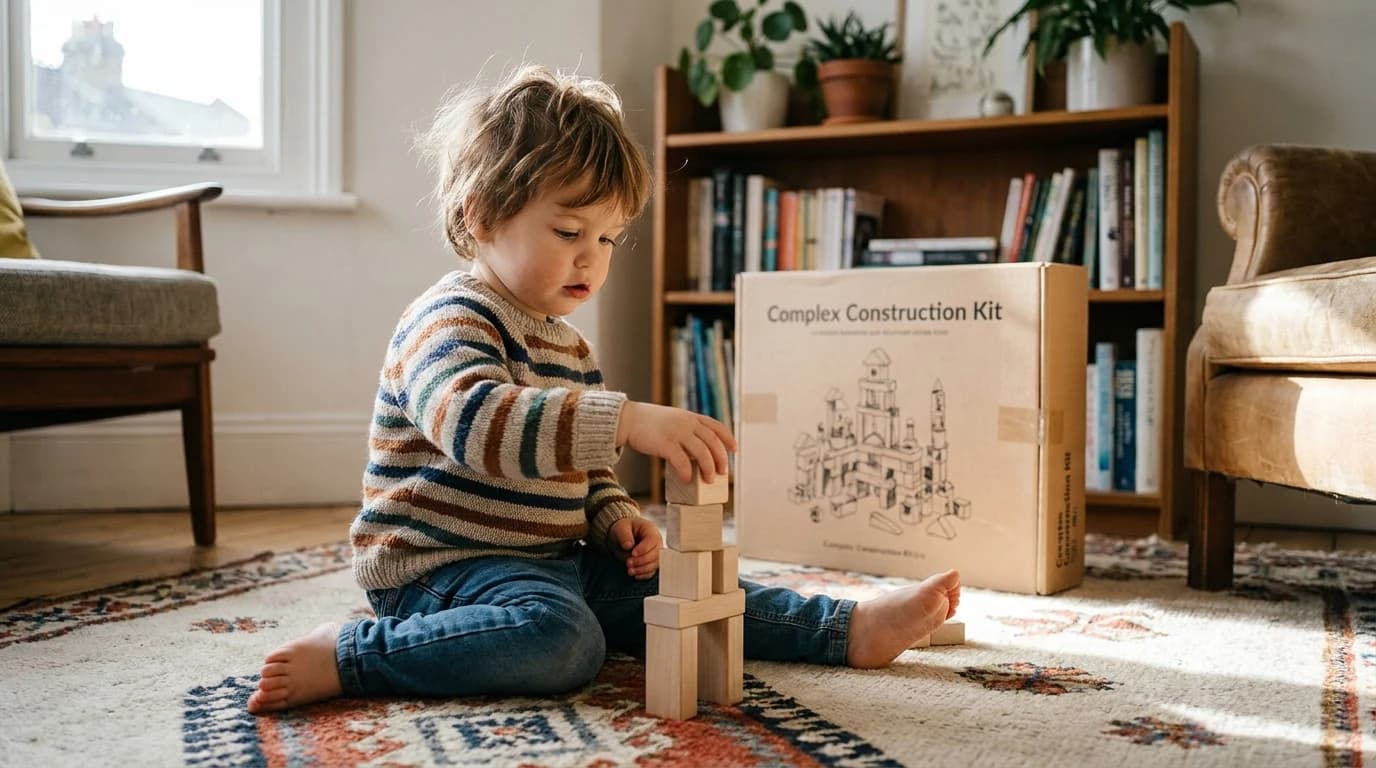
Toy boxes carry an age range - "8+", "ages 3-5" - and the instinct, especially from a generous aunt, uncle, or grandparent, is to round up. The thinking feels reasonable: a smarter kid deserves a challenge, the toy lasts longer, and the higher number signals you take the child seriously.
The falsifiable claim here is simple: buying up does not extend a toy's useful life - it shortens it. When a child opens something they can't yet manipulate, read, or strategize around, the toy produces frustration, not engagement, and frustration is the fastest route to a toy being abandoned. The research below is the test of that claim, and it holds up.
What the research actually shows
The study gave kids toys from three age brackets
In 2021, researchers publishing in Applied Developmental Science ran the experiment directly. They gave 243 children, split into four age groups spanning ages 1 to 8, three kinds of toys: ones targeted at their own age, ones aimed one group younger, and ones aimed one group older. Across nine toy categories, they recorded whether each child fully utilized the toy - used it the way it was designed to be used.
Considering all age groups and toys, children were less likely to fully utilize toys targeted toward older children than age-appropriate toys.
The effect was not uniform - it depended on the toy category and the child's age - but the headline finding is the practical one for a gift-giver. The toy made for the next stage up is the one most likely to go underused. The "younger" toy, interestingly, fared better than the "older" one: a child can almost always find something to do with a simpler toy, but a too-advanced one stalls.
Pediatric guidance points the same direction
This lines up with the American Academy of Pediatrics. Its guidance on choosing toys repeatedly returns to developmental match: the best toys are the ones that fit the child's current skills and gently stretch them, not ones that leapfrog several stages.
The same AAP guidance pushes "back to basics":
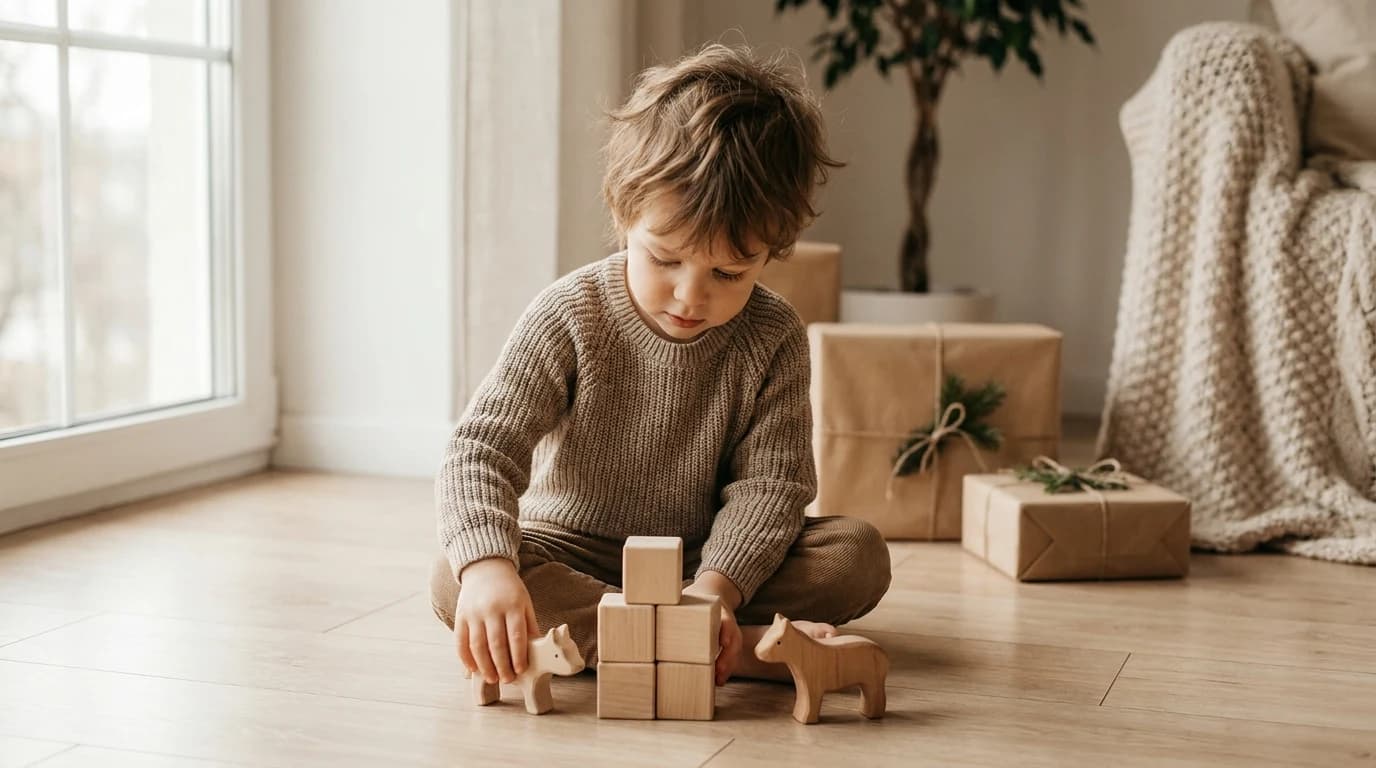
- Blocks
- Vehicles
- Simple figures
- Art supplies
Open-ended toys flex across a wide band of ability, so the age-match question matters far less for them than for a single-function gadget.
How to actually match age without knowing the kid
You usually don't know exactly where a child sits developmentally, and that's fine - you don't have to. Two moves cover almost every case.
Aim low, and let them breeze through it
What to do:
- Aim at the lower end of the printed range, or one notch below
- For a child turning six, treat a "5-7" toy as the safer bet than a "7-9" one
Why that asymmetry works:
- Slightly-too-easy has a mild downside: they breeze through it
- Too-hard has a real one: the toy never gets opened twice
Open-ended absorbs the guesswork
The CDC frames development as something you watch unfold through how a child plays, learns, speaks, acts, and moves - it's a moving target, not a fixed grade. Toys that can be used many ways absorb that variability.
A set of magnetic tiles or a bin of blocks works for a wide age band because the child sets the difficulty; a battery-powered toy with one correct sequence does not.
| Situation | Buy-up instinct | Better-matched pick |
|---|---|---|
| Kid you barely know | Flashy "older" gadget to impress | Open-ended classic (blocks, tiles, art set) |
| Right at a birthday milestone | The next age bracket up | Lower end of their current bracket |
| "They're advanced for their age" | Skip a level | Match the level, add depth not difficulty |
| No idea what they own | One more themed playset | A versatile staple they'll combine with anything |
The exception worth naming
There is one honest case for buying up: a genuine, demonstrated obsession. What that looks like:
- A kid who already builds complex sets unprompted
- A kid who has clearly outgrown their current shelf
- Parents who will tell you so without being asked
There, the printed age range is a floor, not a ceiling.
That's a child you know well, though. For the child you don't know well - the niece, the friend's kid, the white-elephant draw - the safe and evidence-backed default is to match the age in front of you and lean open-ended.
If you want a structured starting point by category, our board games by kids' age guide walks through matching game complexity to a child's stage, and our piece on why fewer, simpler toys lead to better play covers the open-ended-over-flashy half of the equation.
Sources
The age-appropriateness finding comes from a peer-reviewed study of 243 children; developmental-match and "back to basics" guidance is from the American Academy of Pediatrics; the framing of development as something observed through play is from the CDC. Full links below.
Your next step
Shopping for the age they are now? Start here.
Common questions
Isn't buying a slightly older toy a good way to make it last longer?
What should I buy if I don't know the child's exact developmental level?
Is it ever right to buy a toy meant for an older age?
Why do open-ended toys sidestep the age problem?
Research Sources
- Children's utilization of toys is moderated by age-appropriateness, toy category, and child age - Applied Developmental Science (Dauch et al.)
- American Academy of Pediatrics (HealthyChildren.org) - What to Look for in a Toy
- CDC - Developmental Milestones (how children play, learn, speak, act, and move)
- NAEYC - What the Research Says: Impact of Specific Toys on Play (Trawick-Smith)