Key takeaways
- "How many ways can this be played with?" predicts a toy's shelf life better than its price or its "educational" label.
- The AAP's 2019 toy-selection report says high-quality toys "need not be expensive" and that the lights and sounds of electronic toys can detract from the social engagement that builds language.
- Open-ended toys (blocks, plain figures, art supplies) make the child do the imagining; closed-ended toys do it for them and go quiet once the trick is learned.
- The fix for a stale playroom is usually subtraction and rotation, not a new purchase — keep a deliberate tilt toward open-ended toys with a few closed-ended ones for the satisfaction of finishing.
On this page
The test that predicts whether a toy gets played with twice
Here is a fast way to tell whether a toy will still get pulled off the shelf in three months, before you buy it: ask how many different ways a child could play with it. A set of wooden blocks has effectively infinite answers. A press-the-button-and-it-sings dog has exactly one.
That single distinction — open-ended versus closed-ended — predicts shelf life better than price, brand, or the "educational" sticker on the box.
Closed-ended toys aren't bad. They teach something specific and then they're done — a jigsaw has one solved state, a shape-sorter has one right slot per shape, and that closure is genuinely satisfying — it is the whole appeal of the jigsaw puzzles we rank for older kids and adults. The problem is a playroom made entirely of them: each toy performs its trick, the child watches, and the toy goes quiet.
What the difference actually is
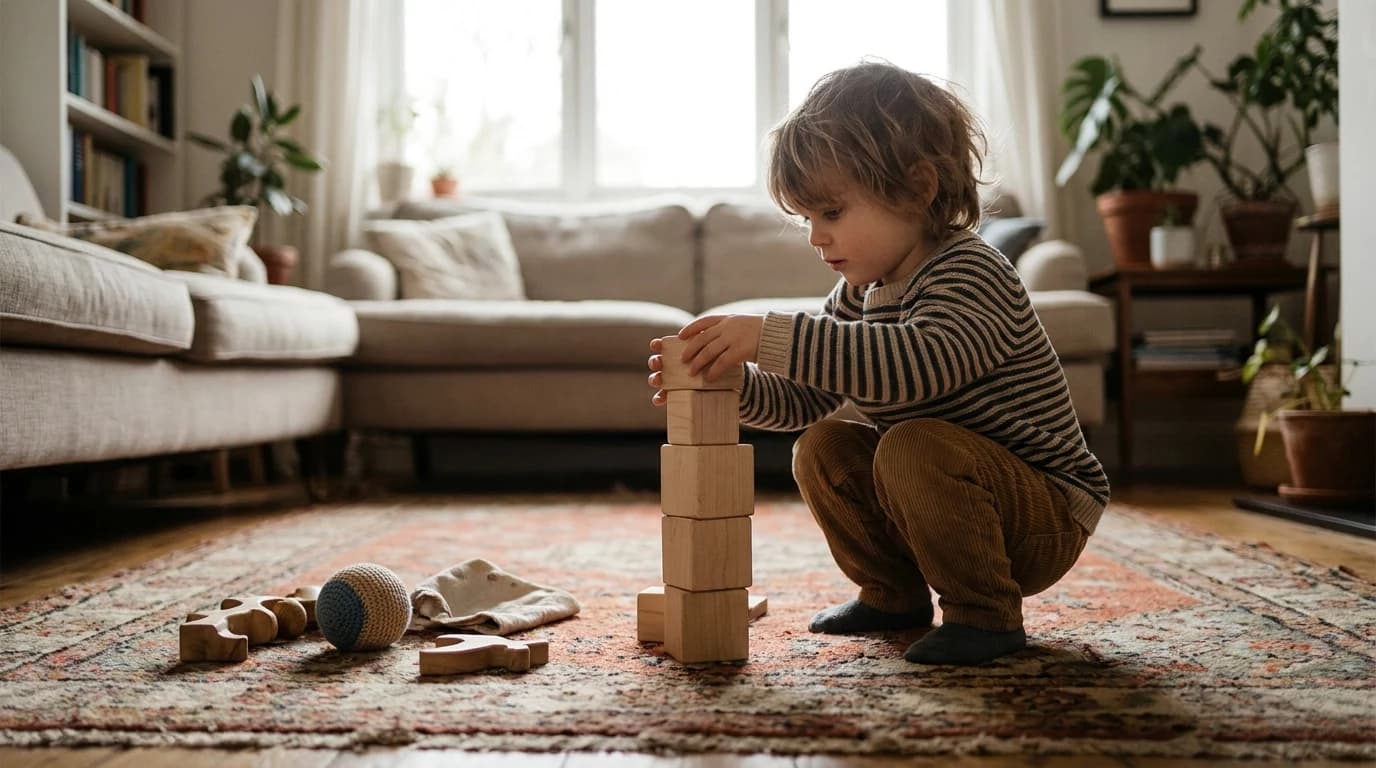
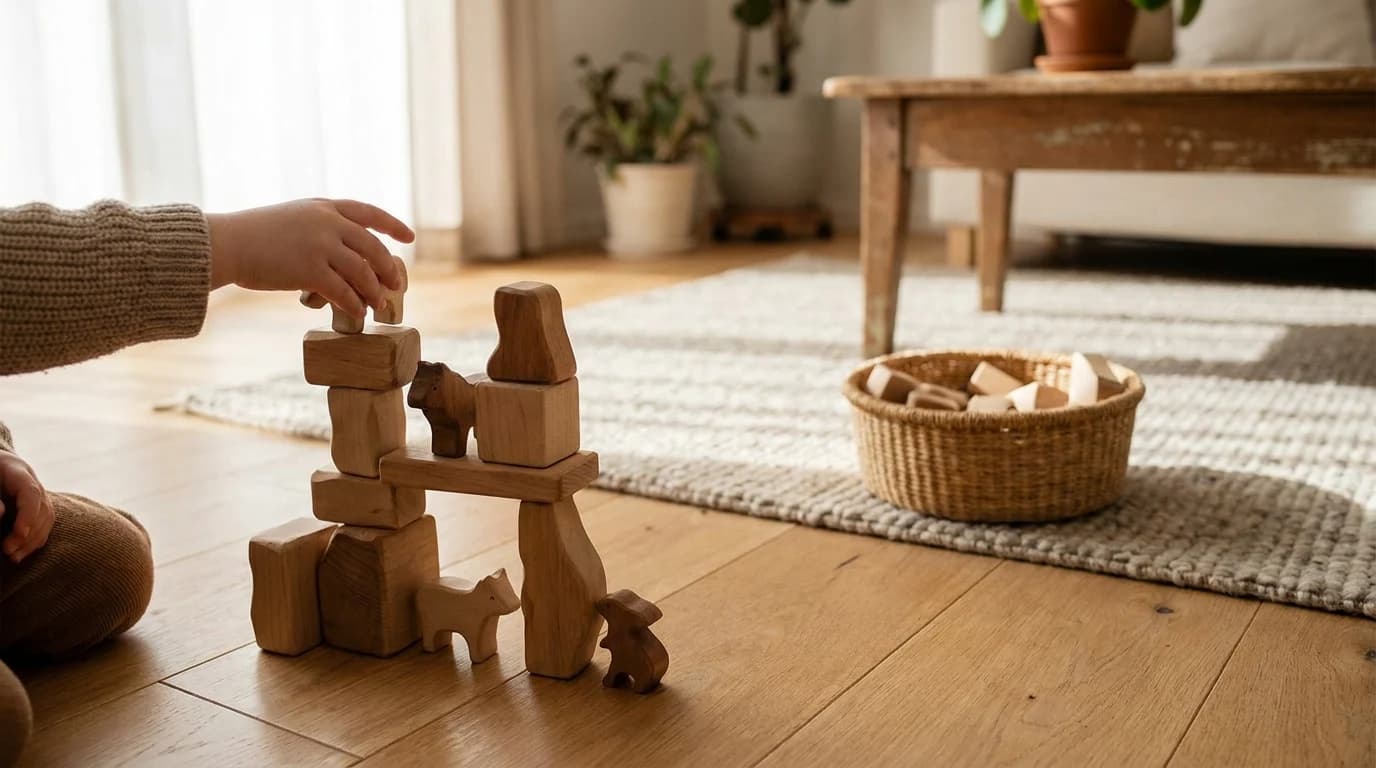
- Open-ended toys have no single correct outcome. Blocks, plain dolls and figures, art supplies, play silks, magnetic tiles, loose parts. The child decides what it is and what happens. The American Academy of Pediatrics calls these out specifically — a stack of blocks an 18-month-old simply stacks becomes, at age two, a "bottle" to feed a doll or a bridge to drive a car over. Same toy, new game, because the child supplies the meaning.
- Closed-ended toys have a built-in goal or a single function. Puzzles, shape-sorters, most battery-powered light-and-sound toys, single-purpose gadgets. Useful in moderation — they build fine-motor skill, cause-and-effect, and the satisfaction of finishing — but they don't grow.
The litmus test: what the toy does vs what the child does
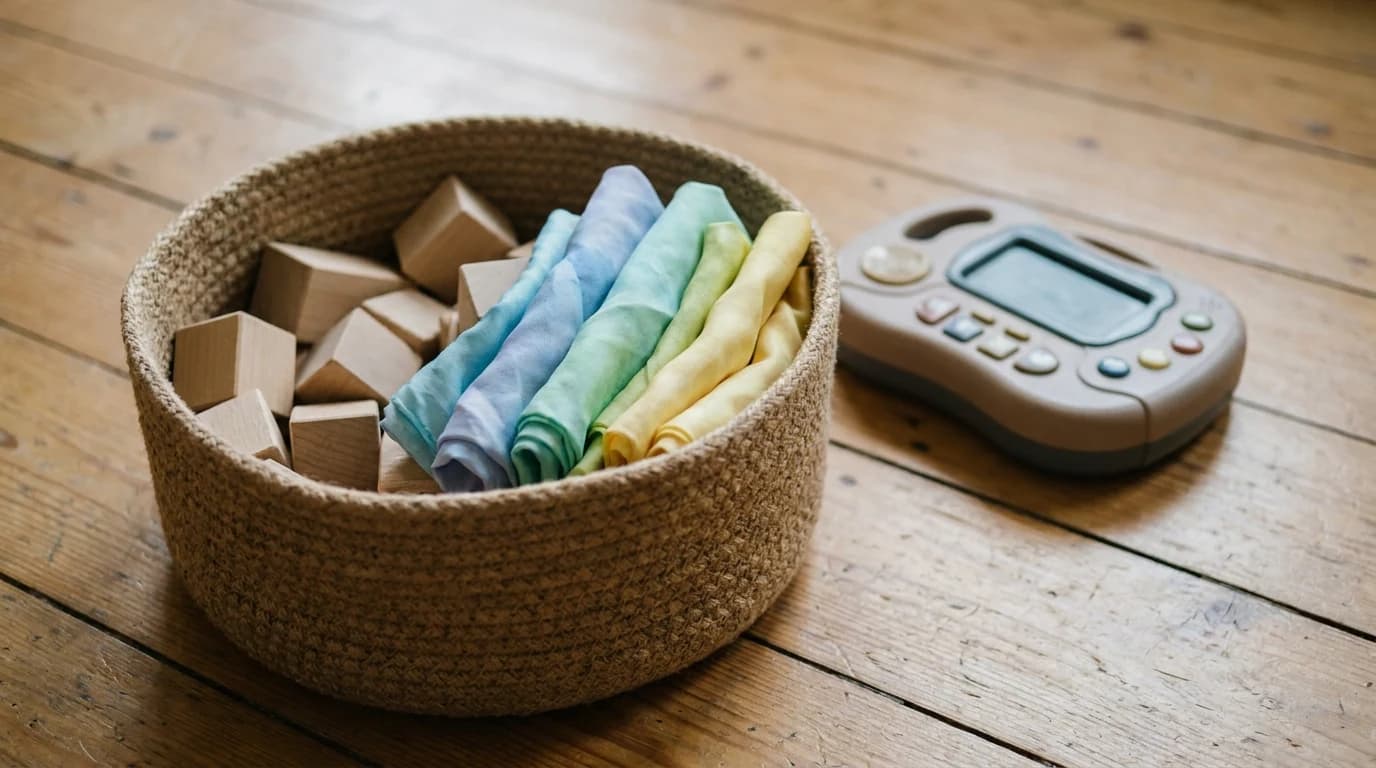
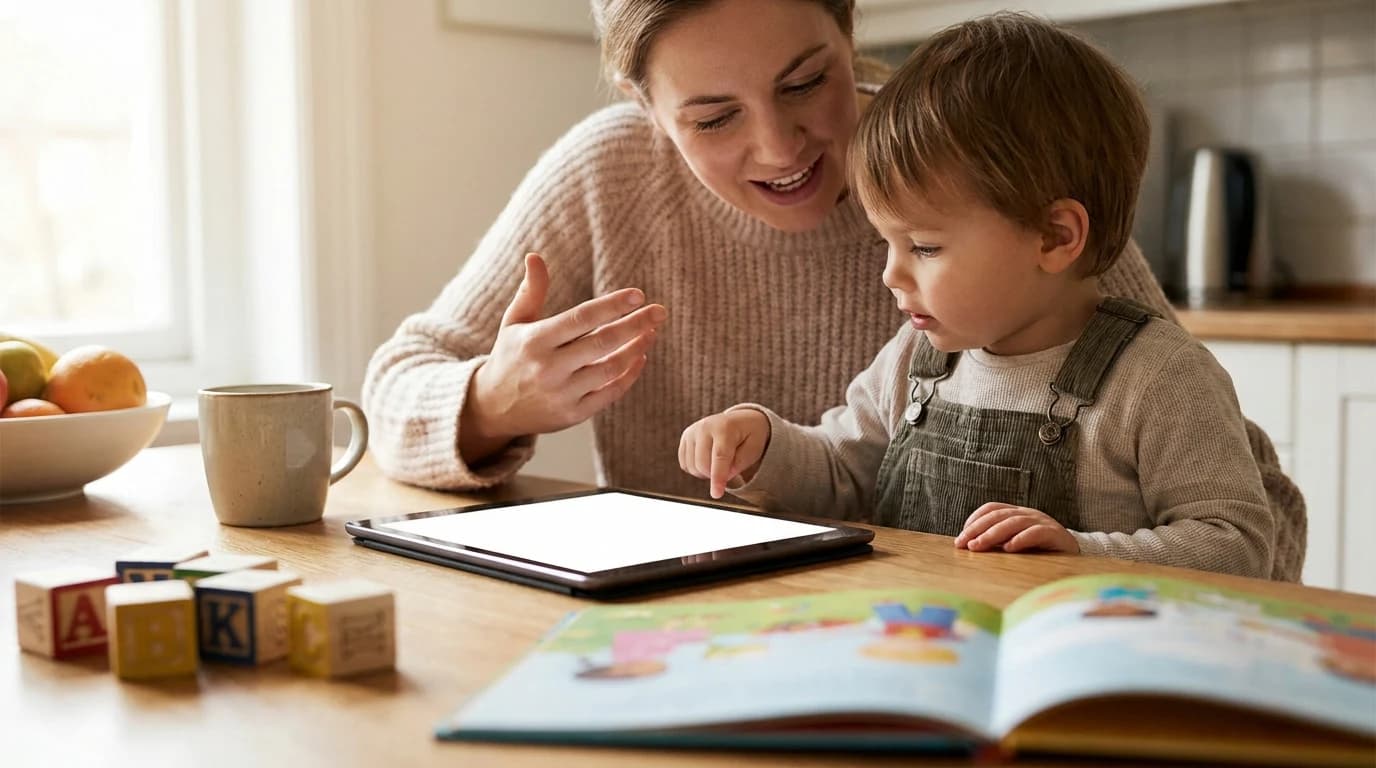
The AAP's 2019 clinical report on toy selection is blunt about the noisy ones: the "core elements of such toys (eg, lights and sounds emanating from a robot) detract from social engagement that might otherwise take place." When the toy performs, the child spectates. When the toy is quiet, the child has to bring the play.
Key Takeaways
- "How many ways can this be played with?" predicts a toy's shelf life better than its price or its label.
- The AAP says high-quality toys "need not be expensive" — blocks and household objects do the developmental work that flashing electronic toys claim to.
- Open-ended toys make the child do the imagining; closed-ended toys do it for them and then fall silent.
- The fix for a stale playroom is rarely a new toy. It's swapping a few one-trick toys for a few do-anything ones.
The play-value ratio
Think of every toy as a ratio: what the child does ÷ what the toy does. You want that number high.
| Open-ended (high ratio) | Closed-ended (low ratio) | |
|---|---|---|
| Examples | Blocks, magnetic tiles, plain figures, art supplies, play silks, sand, kinetic dough | Puzzles, shape-sorters, light-up musical toys, single-game electronics |
| Who supplies the idea | The child | The toy |
| Number of "right" outcomes | Effectively infinite | One |
| Replay value | Grows with the child for years | Drops sharply after the trick is learned |
| What it builds | Imagination, problem-solving, language, flexible thinking | A specific skill, then plateaus |
| Failure mode | Needs the child to be allowed to get bored first | Becomes background noise once mastered |
Neither column is the enemy. A playroom that is all open-ended can frustrate a kid who sometimes wants the clean win of a finished puzzle. The goal is a deliberate tilt toward the left column, with a handful of good closed-ended toys for the satisfaction of completion.
A quick way to run the ratio in a shop
- Picture three different games a child could invent with it. If you can't get past one, the ratio is low.
- Ask what happens when it's switched off, or when the one puzzle is solved.
- Check whether the play would still work with a sibling four years older or younger.
What the research actually supports — and what it doesn't
The honest version: there is strong, consistent guidance that simple, traditional, open-ended toys facilitate the kind of play that helps kids — and much weaker evidence for the flashing, talking, screen-based toys marketed as developmental upgrades.
The burden of proof sits on the gadget
The AAP clinical report frames "the best toys" as "those that match children's developmental skills and abilities and further encourage the development of new skills," and highlights toys that "grow with the child." It also notes the evidence gap directly: the report set out to address "the evolving replacement of more traditional toys with digital media–based virtual 'toys' and the lack of evidence for similar benefits in child development."
The claim is narrower than the headlines: nothing here says closed-ended toys are harmful or that you should throw out the puzzles. Completing a puzzle is real cognitive work.
What the evidence does suggest is that a toy whose whole appeal is that it does something — sings, lights up, talks — tends to displace the back-and-forth that builds language and imagination, and it gets boring fast once the novelty wears off. NAEYC makes the positive case plainly: blocks, paint, sand, playdough, and "natural materials like twigs, flowers, and herbs" are "some of the most valuable learning materials," available "at little to no cost."
How to read a toy aisle (or a gift list)
You can sort most toys in about five seconds with these questions:
- Does it have an off switch? A toy that needs batteries to do its main job is usually closed-ended. The exception is open-ended electronics like a basic kids' camera; the rule of thumb is whether the batteries power the play or just a light show.
- Can a two-year-old and a six-year-old both use it well? If yes, it's open-ended and it'll last. If it's clearly "ages 4–5 only because that's when the one game makes sense," it's closed-ended.
- What does the box promise? Boxes for closed-ended toys describe what the toy does ("sings 20 songs!"). Boxes for open-ended toys can barely describe the play because the child invents it.
- Is "educational" the loudest word on it? Treat that as a yellow flag, not a green one. The AAP cautions that most products marketed as "educational" — especially apps — "really aren't," targeting narrow memory skills rather than the flexible thinking that open-ended play builds.
The fix for a stale playroom isn't a new toy
Subtract and rotate before you add
What actually revives the play:
- Boxing up a third of the closed-ended toys — the ones that have done their trick
- Leaving the open-ended core out and visible
- Grouping materials so the invitation is implicit: tape, paper and craft sticks together, and let the child decide it's a sign, or a sword, or a kite
What parents reach for first, and shouldn't:
- Buying something new the moment a kid declares everything boring
- Adding another single-function toy to a shelf already full of them
- Giving explicit directions for what the materials are "for"
NAEYC's advice for setting up open-ended materials is to "display items in a way that suggests what your child could do with them without giving explicit directions."
If you're buying, the highest-play-value gifts are almost embarrassingly plain: a good set of wooden or magnetic blocks, a basket of plain figures, real art supplies, a length of fabric. They photograph badly and they outlast everything with a battery in it.
Sources & Research
- American Academy of Pediatrics — "Selecting Appropriate Toys for Young Children in the Digital Era," Pediatrics (2019), 143(1):e20183348
- HealthyChildren.org (AAP) — "Toy Buying Tips for Babies & Young Children: AAP Report Explained"
- NAEYC — "Harnessing the Joy of Open-Ended Materials with Your Child"
Your next step
Want open-ended? These are the picks with the most ways to play.
Common questions
Are closed-ended toys bad for kids?
What are some examples of open-ended toys?
Do electronic and 'educational' toys actually help development?
How do I quickly tell if a toy is open-ended in a store?
Research Sources
- American Academy of Pediatrics, COUNCIL ON EARLY CHILDHOOD — "Selecting Appropriate Toys for Young Children in the Digital Era," Pediatrics (Jan 2019), 143(1):e20183348 (high-quality toys "need not be expensive"; lights/sounds detract from social engagement; toys that "grow with the child"; lack of evidence for digital/virtual toys)
- HealthyChildren.org (AAP) — "Toy Buying Tips for Babies & Young Children: AAP Report Explained" (pretend/imaginary play, traditional toys, the "educational" label caution, screen-time guidance)
- NAEYC — "Message in a Backpack: Harnessing the Joy of Open-Ended Materials with Your Child" (blocks, paint, sand, playdough, twigs/flowers as valuable low-cost materials; display without explicit directions)